Key Risk Factors Affecting Farmers’ Mental Health: A Systematic Review
Sahar Daghagh Yazd, Sarah Ann Wheeler, Alec Zuo
International Journal of Environmental Research and Public Health · 2019 · Systematic review · CC BY
doi:10.3390/ijerph16234849 (opens in a new tab)
We email you when a new notice or a question about this paper appears.
Abstract
Recently, concern has increased globally over farmers’ mental health issues. We present a systematic review of the outcomes, locations, study designs, and methods of current studies on farmers’ mental health. In particular, this review aims to fill an important gap in understanding of the potential key risk factors affecting farmers’ mental health around the world. 167 articles on farmer mental health were included in a final systematic review using a standardized electronic literature search strategy and PRISMA guidelines. The four most-cited influences on farmers’ mental health in the reviewed literature respectively were pesticide exposure, financial difficulties, climate variabilities/drought, and poor physical health/past injuries. The majority of studies were from developed countries, most specifically from the United States, Australia, and the United Kingdom. Comparative studies on the mental health of farmers and other occupational workers showed mixed results, with a larger portion identifying that psychological health disturbances were more common in farmers and farm-workers. Knowledge of farmer psychological disorder risk factors and its impacts are essential for reducing the burden of mental illness. Further research will be required on climate change impacts, developing country farmers’ mental health, and information on how to reduce help-seeking barriers amongst farmers.
Full text
From PubMed Central, U.S. National Library of Medicine, as current on Oct 22, 2026. Paragraph numbers are ours, so an answer can point at one.
1. Introduction
Researchers have identified a number of occupational health risks through studies of farming communities, and some have specified farming as an especially stressful occupation. Farming is associated with a range of physical and mental health risks because of the hard work under challenging conditions. Studies on mental health in farming communities around the world have identified several common risk factors, namely: commodity prices, debt, climate change, drought, overwork, government regulations, isolation, role conflict, time pressure, and poor housing.
It has been shown that chronic stressors have a major influence on well-being and health. Particularly, stress is associated with an increased prevalence of mental disorders, such as depression and anxiety. Stress has dominated the literature as one of the most broadly researched psychosocial constructs, mainly in the work-related stress area. Work-related stress is defined as a conflict when the demands of work are high, and the worker cannot manage, control, or cope with that stress. For farmers in particular, the advent of future climate change means that their job will become even more stressful. Williams reported that chronic stress among farming communities might lead to physical problems (e.g., headaches, sleep problems), mental problems (e.g., anxiety, anger, depression), and cognitive issues (e.g., memory loss, inability to make decisions). Farmers have also been more likely to report that life was not worth living than non-farmers. Mental problems among farmers can affect their lives in different ways, and the impact of stress factors are varied among them. These include less interest in pleasure, less concentration, loss of appetite, weight change, tiredness, irritability, problems sleeping, fatigue, loss of control, and anxiety. Also, loss of self-esteem, withdrawal from social activity, relationship breakdown, forgetfulness, loss of temper, relaxation problems, feeling blue, and substance abuse have been reported. A danger of burnout and exhaustion is possible with all these symptoms. Burnout is a gradually developing disorder that may consist of physical and mental exhaustion, a cynical attitude towards work, and a reduction in self-esteem. Most importantly, mental disorders have been identified as one of the key risk factors for suicide attempts among farmers. High suicide rates among farmers, farm manager and agricultural labourer have been reported in several studies, which is considered one of the most serious concerns affecting some farming communities. As the issue of farmers’ mental health raises many concerns, we conducted a search of the literature to answer the following main research questions: what are the key risk factors affecting farmers’ mental health and how does this differ around the world?
To explore the research question, this paper systematically reviews published studies on farmers’ mental health, and details the risk factors that have been considered and how farmer mental health has been measured. What is clear is that interpretations of mental health outcomes vary across identified studies, and most of the times outcomes are not clearly defined. We distinguish between mental health and mental disorder here. According to the WHO (2007; p. 1), mental health is: “a state of well-being in which the individual realizes his or her own abilities, can cope with the normal stresses of life, can work productively and fruitfully, and is able to make a contribution to his or her community”. Mental disorders are normally defined by some combination of abnormal thoughts, emotion, behaviour, and relationships with others. Mental disorders include depression, anxiety, stress, schizophrenia, bipolar disorder, and emotional/psychological distress. The most common mental disorders are said to be anxiety and depressive disorders, which are a reaction to the stresses of life. A person with an anxiety disorder feels distressed a lot of the time, for no apparent reason, and a person with a depressive disorder can experience a long-term depressed mood and loss of interest in activities that used to be enjoyable. The burden of mental disorders continues to grow with substantial impacts on health and major social, human rights, and economic consequences around the world.
Given the growing farming pressures in many countries (e.g., declining productivity, declining terms of trade, worsening weather impacts, and deteriorating soil and water quality), evidence-based understanding of risk factors on farmer mental health will become increasingly more important to improve the efficiency of prevention efforts. Hence, we sought to understand what the potential key risks affecting farmers’ mental health are, as well as if these risks vary across space and time.
2. Materials and Methods
This systematic review followed the standard Preferred Reporting Items for Systematic Reviews and Meta-Analyses (PRISMA), namely: (1) identification of literature; (2) screening questions; (3) eligibility using inclusion criteria; and (4) assessment of the quality of the studies and detection of any possible bias, which are discussed in the following sections.
2.1. Identification
To identify relevant literature, we searched the literature published until April 2019 in electronic databases PsycINFO, PubMed, Scopus and Google Scholar using the following keywords: “Mental health” OR “mental disorder” OR “depression” OR “distress” OR “anxiety” OR “stressors” in the combination of “farmer” “farmworker” “agricultural worker”. Note: suicide and suicide ideation was not included in this review.
2.2. Screening Questions
The electronic database search generated 1224 English language articles (excluding duplicates), and after screening the title and abstract, 436 studies were included in the review. Then the body of these selected articles were screened with the following questions:Are farmers included as a general study population? (y/n)Are any kind of “mental disorders” part of the study? (y/n)
Are farmers included as a general study population? (y/n)
Are any kind of “mental disorders” part of the study? (y/n)
Based on the results of the screening questions, 329 studies were first included in the review. Studies were excluded because of limited relevance to farmers’ mental health issues (e.g., those focused on rural communities as a whole or those related to farmer/rural suicidal behaviours only).
2.3. Eligibility Assessment
The following inclusion criteria were then applied:Does the study clearly mention which risk factors/stressors affect farmers’ mental health (y/n)?Does the study detail the direction on farmers’ mental health (+/−/0)?
Does the study clearly mention which risk factors/stressors affect farmers’ mental health (y/n)?
Does the study detail the direction on farmers’ mental health (+/−/0)?
Among the identified articles, 162 failed to meet the eligibility criteria, hence 167 articles were included in the review. Of the 167 articles, 146 of these were quantitative studies. Figure 1 provides the roadmap followed for the studies selection.
2.4. Assessment of the Quality of the Studies and Detection of Possible Bias
Each study that used quantitative methods was rated using the OHAT risk of bias rating tool. The OHAT risk of bias tool consists of a set of questions to address the main bias domains (see Appendix A for the bias questions). Each question within the tool receives one of four assessment levels (definitely low risk of bias, probably low risk of bias, probably high risk of bias, and definitely high risk of bias). Based on the answers to the assessment questions, each study was classified into one of the three tiers proposed by the OHAT to synthesise risk of bias evaluations across studies.
NVivo, a qualitative data analysis software, was used to classify the total 167 selected studies on farmer mental health. We provide an overview of the findings of this review for: (i) study geographical focus, (ii) mental health scales or measures, (iii) mental health of farmers versus non-farmers, (iv) key farm risk factors, (v) socio-demographic characteristics of farmers with poorer mental health, and (vi) farmer help seeking behaviour.
3.1. Geographic Focus
Research into farmer mental health has been conducted in several countries, but mostly in developed countries. As Table 1 and Figure 2 show, the United States, Australia and the United Kingdom have conducted the greatest amount of research in this space (27%, 17%, and 8% respectively). Of the papers that focused on farmers’ mental health, the majority used quantitative methods (146 studies) versus qualitative methods (18), versus a combination of both qualitative and quantitative (3).
Figure 3 shows an increasing focus on farmer mental health research over the past couple of decades, with an increase from the mid-2000s onwards. This increase was driven by a surge in research by researchers on Australian farmers’ mental health 2005 onwards (with was near the middle of the Millennium Drought in Australia). The highest number of publications was in 2018.
3.2. Measures and Methods of Farmer Mental Health and Assessment of Quality
Method and measurement assessment of farmer mental illness has varied greatly (see Table 2). Our systematic review indicates that literature used a variety of methods and scales for measuring farmer mental health. The most common method for measuring mental health was the Centre for Epidemiologic Studies-Depression Scale. However, other reasonably common methods such as Kessler 10, Hospital Anxiety and Depression, Clinical Tests, Mini-Mental State Examination, and SF-36.
Several measures have also been constructed to measure agricultural-related stress, including the Farm/Ranch Stress Scale, the Edinburgh Farming Stress Inventory, Welke’s Farm Ranch Stress Inventory, and Migrant Farmworker Stress Inventory.
The assessment of bias by using the tiering approach across the studies showed that, out of the 146 quantitative studies, 99 (68%) of them were categorised in “Tier1” or “plausible bias unlikely to seriously alter the results”; 37 (25%) of studies were categorised in “Tier2” or “plausible bias that raises some doubt about the results”; and only 10 studies (7%) of studies were categorised in “Tier3” or “plausible bias that seriously weakens confidence in the results.”
3.3. Mental Disorders among Farmers Versus Non-Farmers
The systematic review found that 28 articles (17% of the total) compared farmers’ mental health with other occupational groups. Out of those articles, 20 studies (71%) suggested farmers have worse mental health issues than the general population, e.g.,. Also, the National Institute for Occupational Safety and Health examined 130 different occupations and found farm workers and farm owners had the highest rate of deaths due to stress-related conditions and mental disorders. Higher mental disorder levels and poorer vitality have been reported for animal farmers and dairy farmers, compared to non-farmers. Others also find a higher prevalence of mental disorders in farm workers as compared to employed non-farmworkers and other occupations such as teaching, office work, and building construction. Wheeler et al. identified that some Australian irrigators experienced high levels of psychological distress nationally; higher than dryland farmers or the Australian population. Gevaert et al. found farmers, self-employed, and own account workers have worse mental health compared to medium-to-large employers and liberal professions. Ulrich et al. identified that stress was significantly higher in farmworkers compared with non-farmworkers only in one farming period.
However, not all studies confirm that farmers have worse mental health than the general population. Our review showed that 18% of the studies found farmers have a lower prevalence of mental illness than non-farmers, and 11% reported that there was no difference. For example, Otsuka and Kato compared a traditional society occupation group (e.g., farmers and skilled manual workers) with an industry occupation group (e.g., managers and technicians) and revealed that the industrialized occupation group had higher levels of depression. Similarly, Liu et al. found that general workers suffered from higher levels of mental stress and worse physical health compared to farmers. But, Thomas et al. and Feng et al. reported farmers have a lower prevalence of mental illness than the general population, although were more likely to report thinking that life was not worth living. Tomasson and Gudmundsson stated that farmers were less likely to consume alcohol and that farmers’ mental health problems were 5% lower than non-farmers. Finally, Brew et al. and Stain et al. argued that there was no difference between mental health outcomes and wellbeing of farmers compared to non-farm workers in general, although Brew et al. added that those farmers who lived more remotely had poorer mental health than non-farm workers living remotely.
3.4. Farm Risk Factors
Our systematic review identified several types of farmers’ risk factors. Table 3 depicts the main cited key risk factors of farmers that have been cited in the literature, namely: pesticide exposure, financial problems, climate variability/drought, physical health, isolation, role conflict, and time pressure respectively. We discuss each in more detail below.
3.4.1. Pesticide Exposure
An association between pesticide exposure and farmer mental disorders has been reported in 43 reviewed studies in both developed and developing countries. As Table 3 illustrates, pesticide exposure is more cited in the developing country literature, for example studies in Brazil, India, Nepal, Philippines, Iran, Tanzania, China, Egypt, Pakistan, and Costa Rica have focused on pesticide exposure and farmer mental distress. Among the developed country literature, United States studies have also studied links between pesticide exposure and farmer mental health. Some pesticides are neurotoxic, which are said to directly affect neural systems known to cause mental illness and depression. Some studies have examined pesticide exposure in general, while others considered specific compounds such as organophosphates. Organophosphates can enter an individual’s body by the skin or through inhalation, and this is associated with a range of physical symptoms (e.g dementia, Parkinson, phobia, diarrhoea, vomiting, dizziness, chest-pain, memory loss, concentration difficulties, body weakness, irritation, etc.),. Wesseling et al. found a relationship between acute occupational poisoning with organophosphates and psychological distress. Koh et al. revealed that the association with depression was stronger amongst farmers with past pesticide poisoning episodes than amongst those with no such reported experiences. A study by Serrano-Medina et al. on 140 agricultural workers with organophosphorus pesticide exposure in Mexico showed that 25% of them had major depression with suicidal attitudes, 24% had anxiety, 24% had combined depression–anxiety, and 22% of them had major depression and no psychiatric diagnosis disorder. Focus group discussions with cotton-growing farmers in India showed that during hot summer and windy seasons, some farmers reported serious health problems such as cancer, mental illness, and diabetes.
3.4.2. Financial Pressures
Financial challenges were reported in 39 articles as negatively impacting farmers’ mental health, particularly where farming was the primary income source. Various types of financial stress were reported by farmers in both developed and developing countries, including market prices for crops and livestock, irregular/insufficient cash flow, increased input costs, taxes, health care costs and high debt. A few studies have examined the links between the 1980s farm financial crisis and mental health among U.S. farmers. During the crisis, farmers were faced with decreasing world demand, higher input costs, and low commodity prices. Bultena et al. found these factors caused farmer psychological distress, depression, lower life satisfaction, alcoholism, and even suicide. Farmers experiencing significant financial losses usually seek to make significant farm changes (e.g., through reducing the number of paid farm employees, working longer hours), diversify/change production or decide to exit.
Given that many other family members are impacted by farm financial problems, this has been found positively associated with farmers’ family unit stress perceptions. Other mental health associations with financial stress include children numbers, broadacre production, and rental land. Lawrence et al. indicated that farmers are more successful in finding some alternative agronomic options for adapting to drought, but adapting to financial burdens was more difficult. There has been a positive and consistent relationship found between higher farm profit, greater well-being, and less distress amongst farmers and farm-workers.
3.4.3. Climate Variability
Climate variability was revealed as another large risk factor for farmers in our review (25 articles of included studies focused on climate issues, mostly in developed countries). It is predicted that severe and widespread droughts will increase in the future. Droughts have been categorized as slow-moving disasters which can have significant health effects, usually mediated through environmental, economic, and social pathways. For example, 75% of farmers in a study by Walker et al. reported unfavorable climate conditions and the unpredictability of the weather as their key stress in North America. Kearney et al. found 60% of farmers who worked more than 40 h per week identified bad weather as ‘very stressful’ in Eastern North Carolina. In-depth interviews with 16 citrus growers in Australia, revealed that 11 of them cited drought and insufficient water allocations as potential stressors. The uncertainty of weather was also reported by 70% of farmers in New York State. The observed patterns of climate change have worsened farmers’ worries about the future climate and contributed to their chronic forms of mental distress.
Droughts have been categorized as slow-moving disasters which can have significant health effects, usually mediated through environmental, economic, and social pathways. The agricultural sector is hit the hardest by drought, with farmers experiencing declined production, crop loss, and livestock failure. Farmers reported a strong association between prolonged drought and stress, and higher levels of psychological morbidity. Some studies reported that the major stress in a time of drought is financial hardship. For example, Edwards et al. identified that drought has significant negative economic impacts, especially for farmers who reported that the drought had reduced their output substantially.
Table 3 indicates that Australia stands out in terms of the pressure of climate variability on farmer mental health in our review. Climate stressors were mentioned in 40% of Australian studies, the highest risk factor out of all possible factors. For example, Edwards et al. found that the more severe the drought, the higher the adverse effects on farmer mental health. With the ongoing threat of water scarcity, falling water allocations, water reform, and drought in Australia, Wheeler et al. found that some irrigators in particular industries have higher mental health problems than dryland farmers in the Murray-Darling Basin. Austin et al. found that higher drought-related stress was associated with young farmers (<35 years) who live and work on a farm, and having greater financial hardship. A study by Hanigan et al. showed significant associations between distress and drought duration in young rural women regardless of whether they were in farming occupations or not. However, they found that the level of drought-related distress did not differ between farmers and non-farmers in their sample.
In addition, summer heat waves are likely to have immediate effects on the prevalence and severity of farmers’ mental health. Farmers and farm workers often have no choice but to keep working, even in extreme hot weather. There are also the emotional effects of landscape changes. Loss of gardens (and ‘greenness’) has been reported as a source of distress by farming families.
Despite several studies finding climate variability and/or drought as key risk factors on farmers, studies with a specific focus on climate variability and farmer mental health outcomes are relatively thin. Our review found that only a small amount of research (and much of it was from Australia) have focused on the effects of climate change/drought. We could find only three studies in non-developed countries (India, Ghana, and Iran) concentrating on the mental health effects of climate on farmers. Similar to our findings, a recent study by Berry et al. argued that the mental health effects of climate change has received little attention in research and policy and needs greater systems thinking.
3.4.4. Poor Physical Health/Past Injury
Greater mental illness amongst farmers who have poor physical health, past injury or work disability has also been found. Farming is one of the highest risk groups for occupational injury and illness. Often agricultural workers live at their worksite, so it is not surprising that an injury at work can impact their life satisfaction. Distress was also related to increased physical illness on spouses and possible injury of children, which was particularly felt by farm women. It has been found that farm residents with self-reported physical illness (e.g., neck, shoulder, and back pain; obesity; metabolic syndrome; abdominal adiposity; and cardiovascular disease) tend to have higher self-reported psychiatric impairment. Hawes et al. found that higher body mass index (BMI) and poor sleep quality were also associated with higher depression scores. Carvalho et al. found an association between work end time on the relationship between sleep onset time and farmer psychological well-being. Mazzoni et al. and Stieglitz et al. stated that those farmers who diagnosed with depression had a significantly higher total disability score. DeArmond and colleagues found high levels of somatic symptom disorder (SSD) among farmers. SSD occurs when a person feels extreme anxiety about physical symptoms such as pain or fatigue and is significantly related to depression. Physical toxicity by agro-chemicals and damage to farmer health have been reported in a study by Kannuri and Jadhav. Crandall et al. argued that mental illness and the side effect of its medication can cause cognitive changes, which can put farmers at more risk of injury. Rostamabadi et al. reported that musculoskeletal disorders, cuts, and fractures accounted for the most frequent injuries amongst farmer affecting their mental health. Other researchers discussed that depression and dissatisfaction with life were more strongly associated with agricultural worker injury than among other workers, and that farmers may work longer with physical health problems before receiving a disability pension than other occupations. Also, as previously reported, increased symptoms of depression and suicidal thoughts were found for farm workers with a previous organophosphate poisoning.
3.4.5. Other Risk Factors
Several other risk factors and symptoms predictive of psychological distress in farmers have been identified by researchers, such as government policies, isolation, heavy workload, role conflict, time pressure, poor housing conditions, foot and mouth disease among livestock, coal and gas development, beef crisis, lower levels of mindfulness and farmers’ work ability. Overall these risk factors were stated in almost 42% of the identified studies on farmers’ mental health. Other agricultural stressors which have been identified to be common in developing countries include poor agricultural extension services/contact, poor road infrastructure, unfavourable market prices, poor access to market information, and poor access to credit facilities.
3.5. Socio-Demographic and Farm Characteristics Associated with Mental Health
We concentrate here on three of the most identified socio-demograhic and farm characteristics cited in our systematic review that have been investigated with farmer mental health, namely: gender issues (particularly for female farmers), age, and farming system type.
The literature has mainly focussed on male farmers’ mental health, even though farm women usually engage in several farm roles, which include farm labour/management, household duties and childcare. Overall, our review suggested that female farmers experience more psychological distress than male farmers. However, a few studies found otherwise. Role conflict between farm and home roles, and the absence of husband support are all potential risk factors. Berkowitz and Perkins found that farm women who are in conflict with their husbands about farm roles, or are unhappy with their marriages, are more likely to report stress related health symptoms. Female farmers whose husbands worked more hours on the farm reported higher depressive symptoms. Farm women’s depressive symptoms have also been found to be positively associated with perceived racial or ethnic discrimination and family conflict. Alston et al. found a significant increase in women’s work hours reflected their emotional distress; also that farm women are more likely to talk about their partner’s health and ignore their own. Pattnaik et al. also described the feminization of agriculture as the feminization of agrarian distress.
Similar to male farmers, pesticide exposure, economic hardship and worrying about finances has often been identified as significant risk factors for female farmers’ mental health. This may be a result of women undertaking additional on-farm work because of a reduction in farm paid labour. Carruth and Logan found that women were more likely to report depressive symptoms if they reported driving a tractor, using pesticides, and if they had a recent farm-related injury. Beseler et al. found an increase in the risk of depression among women with a history of pesticide poisoning. Lu examined pesticide exposure based on the duration of pesticide use amongst Philippines farmers, and reported the mean duration of pesticide exposure of 14.2 years for males and 15.4 years for females, resulting in mental and physical abnormalities in 5.4% of males and 13.3% of females. In addition, a lack of family support and listening to loud machines were also predictors of poor female mental health. Alpass and collegues found that farm women experienced higher levels of stress in trying to understand new farming technologies.
Age of farmers and the association with mental health issues has been discussed in-depth in the literature. Overall, younger farmers experienced higher levels of stress-related symptoms. This was most likely associated with higher debt levels. However, Çakmur found that the frequency of depressive symptoms was higher among farmers who were 35 years or older. It has also been found that there are more mental impairments observed with aging farmers. Polain et al. found that older farmers felt an irresistible sense of loss during prolonged drought compared with younger farmers. Scarth et al. found a farmer’s depressive symptoms were not significantly related to their age. In addition, lower education levels, being married and having marital stress, and not living in a joint family, were associated with poorer farmer mental health.
The association with farm type (system used—such as organic farming and industry type) was also a considerable focus in the literature. A study on comparing the self-reported psychological health of workers on organic and conventional horticultural farms by Cross et al. showed no significant difference. However, using scores from the Short Depression Happiness Scale, organic farmers were significantly happier than conventional farmers. Similar self-reported questionnaire survey by Khan et al. on 200 conventional and 157 organic farmers in Indiana, USA, found conventional farmers demonstrated a significantly higher frequency of neurological symptoms and depression problems. Similar results were found in Australian irrigation. However, Brigance et al. indicated that some of the risk factors that affect the mental health of organic farmers—e.g., economic insecurity, long hours of work, social isolation, and unpredictable weather conditions—are the same as the mental risk factors for conventional farmers. A recent qualitative study by Soto Mas et al. on health issues in organic farming argue that although exposure to hazardous pesticides is lower amongst organic farmers, organic farming mostly relies on a few people performing a lot of tasks for cultivation, harvesting, and distribution. This issue can increase psychological and physical risk factors for organic farmers.
3.6. Barriers to Help-Seeking Behaviour
The final area that our systematic review covered was identifying barriers to farmers’ help-seeking behaviour. Not many of the identified studies (only 9 studies, 5% of total) reported help seeking barriers among farmers. Farmer stress and exhaustion of an individual farmer is often hidden, which may delay help-seeking behaviour. Help-seeking is an active search for a relief or cure to fulfil a need and is a complex decision-making process especially for persons suffering from mental disorders. Usually lack of knowledge or the belief that a person should deal with his or her mental problems alone were common reasons that decrease the possibility of individuals’ help-seeking. Lack of access to mental health services in rural areas was another major burden to the delivery of appropriate mental health services. Polain et al. found that usually, older farmers try to access mental health support; however, practical and cultural barriers often prevented them from succeeding. Singh et al. identified that existing policies were impractical and conflicts between various policies and other safety programmes were common barriers to implementation. Other barriers included farmer self-reliance, social image/stigma, negative perceptions of health professionals’ efficacy and high treatment fees. Staniford et al. and Brew et al. found that farmers were half as likely to visit general practitioners or mental health professionals in the last 12 months as compared to non-farmers. Farmers often stated that it was better to manage themselves rather than access help for physical or mental health needs. Also, it has been argued that while the traditional masculine hegemony of male farmers can be a benefit to them during good times, in times of heightened stress (like drought), it can lead them to fail to address their mental health needs.
4. Discussion
This study systematically reviewed relevant research (n = 167) in order to identify the key risk factors on farming communities around the world and summarize the state of knowledge about farmer mental health. Studies reviewed were undertaken in 34 different countries, using several different assessment tools. Of the identified papers, the majority used quantitative approaches and most of them were undertaken within the past 10 years, showing increasing interest in farmers’ mental health issues, both in developed and developing countries.
Elevated levels of mental disorder within farming populations were identified by many studies e.g.,. However, it is also important to note that there is mixed evidence regarding the prevalence of whether mental health was worse in farmers as compared to non-farmers, but a larger portion of studies identified that psychological health disturbances were more common in farmers and farm-workers.
The most reported risk factors for farmers respectively were daily pesticides exposure, financial problems, unpredictable climate, and past injuries. Furthermore, machinery breakdown, hearing loud machines, time pressure, and governmental regulations were other identified risk factors. These conditions potentially make farmers more vulnerable to mental health problems. Outcomes included loss of self-esteem, withdrawal from social/community activity, relationship breakdown, hopelessness, nervousness, inability to function in occupational roles, feelings of suffocation, fatigue, insomnia, loss of control violence, and substance abuse.
The US represents the country with the highest number of farmer mental health studies, followed by Australia. American researchers were mostly focused on the associations between financial problems and farmer mental health, which has been driven by the fact that the US experienced several agricultural crises in the past few decades. Australian researchers were also concerned with financial influences impact on farmer mental health [e.g., 182]; however, Australian studies undertook the largest amount of research on climate and weather stresses for farmers, probably due to the Millennium Drought conditions in Australia in the 2000s which triggered much mental health research.
Most of the studies included in the systematic review used cross-sectional design (92%). The cross-sectional design prevented researchers from making strong inferences about causality and the directionality of effects reported in the studies, as the data observe the study population at only one point in time. Although several key risk factors assessed in the selected studies were significantly associated with farmer mental health status, it is unclear whether farmer stress dimensions were the primary drivers of psychological illness outcomes or not. Longitudinal research might overcome these limitations, by illustrating over the longer time, how mental distress, depression, and anxiety are connected with environmental, social and economic pressures. Also, there is a need to study the association between natural capital factors (e.g., type of farming—regenerative, organic, impact of the environment) and mental distress over the long-term, given emerging research in this space.
Similarly, greater consistency in assessment tools used to examine mental disorder prevalence rates among farmers may be beneficial for future research. The assessment tools used in the reviewed studies varied widely. While each of these tools may be reliable and valid indicators of clinically relevant mental disorders, they may not be directly comparable. As shown in this systematic review, farm environments (weather, environment, etc.) can significantly impact farmer health both mentally and physically. One area that will need further research in the future, is the link between climate variability, rainfall deficiency and severe drought across the world. There is a clear need for more longitudinal research in this space.
While there is extensive evidence that farming is a complex and demanding occupation with various risk factors, we suggest that access to primary care and specialist ongoing services for rural and remote communities needs greater priority. There is an argument that the impact of mental health issues for those living in rural areas is greater because many of the stresses are not paid sufficient attention, since mental health professionals are not as common in rural areas and because considerable barriers stop farmers help-seeking for mental health problems. Formal help-seeking for mental health problems requires that individuals first be able to recognise that a mental health problem exists, and secondly to believe that seeking some help may be beneficial for solving their problem. Limited studies to date have investigated help-seeking behaviour among farmers. Future research needs to investigate how to break down the help-seeking barriers amongst farming communities to decrease the risk of their mental disorders, as well as understanding how different types of policies can influence farmer mental health.
While this study has provided useful information to understand the issues surrounding farmer mental health, it is not without limitations. Although using systematic review principles can help researchers structure and focus literature reviews, there might be literature inadvertently missed, particularly grey literature. The issue of identifying causality of risk factors with mental health also needs careful consideration. In addition, there are many other unexamined factors which may affect farmers’ mental health but they are broader in concept and not just related to farmers. One plausible example could be solar radiation exposure for all outdoor workers, resulting in several severe adverse health effects with possible psychological consequences but also a supposed beneficial effect on some psychiatric disorders, such as depression. Indeed, there might be some therapeutic potential of outdoor activities or being more outdoor vs. indoor, which might be encouraged to improve individuals’ (not specifically farmers) mental health and vitamin D status, but these aspects were not the specific focus of this study and they are left for future research.
5. Conclusions
The findings of this systematic review support the view that farmers’ mental health issues are a result of a complex interplay between social, environmental, and economic factors. The four most-cited risk influences on farmers’ mental health included pesticide exposure, financial difficulties, climate variabilities/drought, and poor physical health/past injuries. Studies in developed countries dominated the literature, with comparative studies suggesting that farmers generally experienced worse psychological health disturbances. Thus, future social, environmental, financial, and health policy needs to consider how best to address various mental health risk factors in the most effective way, as well as understanding how future adverse impacts from climate change can be addressed. Knowledge of risk factors affecting farmers’ mental issues is essential for reducing the burden of mental illness, hence this research is an important step in synthesising some of these important factors and outlining possible suggestions for prevention, as well as areas for future research.
Figures3
From PubMed Central, U.S. National Library of Medicine.
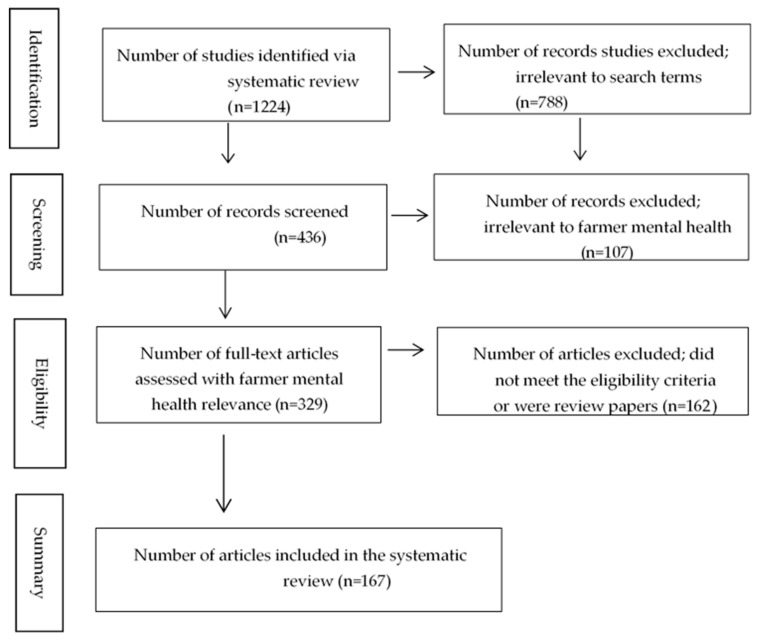
Figure 1
Full legend
Schematic for identifying studies.
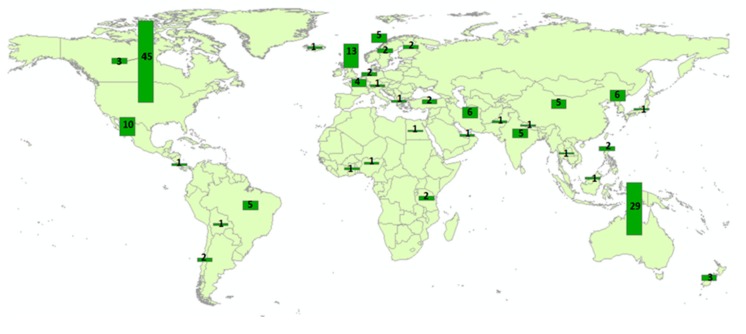
Figure 2
Full legend
Number of farmers’ mental health studies published by country.
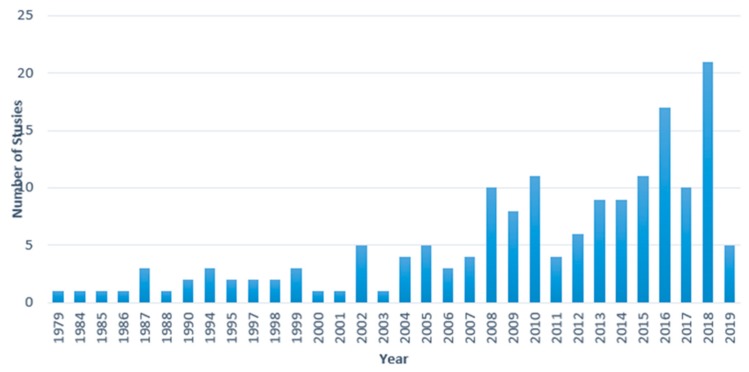
Figure 3
Full legend
Number of farmers’ mental health studies from 1979 to April 2019.
References195
- 1.
Gregoire A. The mental health of farmers. Occup. Med. 2002;52:471-476.
Not in our library10.1093/occmed/52.8.471 (opens in a new tab)
- 2.
Fraser C.E., Smith K.B., Judd F., Humphreys J.S., Fragar L.J., Henderson A. Farming and mental health problems and mental illness. Int. J. Soc. Psychiatry. 2005;51:340-349.
Not in our library10.1177/0020764005060844 (opens in a new tab)
- 3.
Roy P., Tremblay G., Oliffe J.L., Jbilou J., Robertson S. Male farmers with mental health disorders: A scoping review. Aust. J. Rural Health. 2013;21:3-7.
Not in our library10.1111/ajr.12008 (opens in a new tab)
- 4.
Price L., Evans N. From stress to distress: Conceptualizing the British family farming patriarchal way of life. J. Rural Stud. 2009;25:1-11.
Not in our library10.1016/j.jrurstud.2008.03.008 (opens in a new tab)
- 5.
Walker J.L., Walker L.S., MacLennan P.M. An informal look at farm stress. Psychol. Rep. 1986;59:427-430.
Not in our library10.2466/pr0.1986.59.2.427 (opens in a new tab)
- 6.
Raine G. Causes and effects of stress on farmers: A qualitative study. Health Educ. J. 1999;58:259-270.
Not in our library10.1177/001789699905800307 (opens in a new tab)
- 7.
McShane C.J., Quirk F., Swinbourne A. Development and validation of a work stressor scale for Australian farming families. Aust. J. Rural Health. 2016;24:238-245.
Not in our library10.1111/ajr.12261 (opens in a new tab)
- 8.
Vega W., Warheit G., Palacio R. Psychiatric symptomatology among Mexican American farmworkers. Soc. Sci. Med. 1985;20:39-45.
Not in our library10.1016/0277-9536(85)90309-0 (opens in a new tab)
- 9.
Staniford A.K., Dollard M.F., Guerin B. Stress and help-seeking for drought-stricken citrus growers in the Riverland of South Australia. Aust. J. Rural Health. 2009;17:147-154.
Not in our library10.1111/j.1440-1584.2009.01059.x (opens in a new tab)
- 10.
Firth H.M., Williams S.M., Herbison G.P., McGee R.O. Stress in New Zealand farmers. Stress Health J. Int. Soc. Investig. Stress. 2007;23:51-58.
Not in our library10.1002/smi.1119 (opens in a new tab)
- 11.
Mora D.C., Quandt S.A., Chen H., Arcury T.A. Associations of Poor Housing with Mental Health Among North Carolina Latino Migrant Farmworkers. J. Agromedicine. 2016;21:327-334.
Not in our library10.1080/1059924x.2016.1211053 (opens in a new tab)
- 12.
Hovey J.D., Magaña C.G. Exploring the Mental Health of Mexican Migrant Farm Workers in the Midwest: Psychosocial Predictors of Psychological Distress and Suggestions for Prevention and Treatment. J. Psychol. 2002;136:493-513.
Not in our library10.1080/00223980209605546 (opens in a new tab)
- 13.
Logstein B. Farm-Related Concerns and Mental Health Status Among Norwegian Farmers. J. Agromedicine. 2016;21:316-326.
Not in our library10.1080/1059924x.2016.1211055 (opens in a new tab)
- 14.
Hanklang S., Kaewboonchoo O., Morioka I., Plernpit S.-A. Gender Differences in Depression Symptoms Among Rice Farmers in Thailand. Asia Pac. J. Public Health. 2016;28:83-93.
Not in our library10.1177/1010539515620631 (opens in a new tab)
- 15.
Williams R.T. The on-going farm crisis: Extension leadership in rural communities. J. Ext. 1996;34:1-3.
Not in our library
- 16.
Hedlund D., Berkowitz A. The incidence of socialpsychologicl stress in farm families. Int. J. Sociol. Fam. 1979;9:233-243.
Not in our library
- 17.
Hossain D., Eley R., Coutts J., Gorman D. Mental health of farmers in Southern Queensland: Issues and support. Aust. J. Rural Health. 2008;16:343-348.
Not in our library10.1111/j.1440-1584.2008.01014.x (opens in a new tab)
- 18.
Hiott A.E., Grzywacz J.G., Davis S.W., Quandt S.A., Arcury T.A. Migrant Farmworker Stress: Mental Health Implications. J. Rural Health. 2008;24:32-39.
Not in our library10.1111/j.1748-0361.2008.00134.x (opens in a new tab)
- 19.
Hovey J.D., Magaña C.G. Psychosocial Predictors of Anxiety Among Immigrant Mexican Migrant Farmworkers: Implications for Prevention and Treatment. Cult. Divers. Ethn. Minority Psychol. 2002;8:274-289.
Not in our library10.1037/1099-9809.8.3.274 (opens in a new tab)
- 20.
Ramos A., Su D., Lander L., Rivera R. Stress Factors Contributing to Depression Among Latino Migrant Farmworkers in Nebraska. J. Immigr. Minority Health. 2015;17:1627-1634.
Not in our library10.1007/s10903-015-0201-5 (opens in a new tab)
- 21.
Deary I.J., Willock J., McGregor M. Stress In Farming. Stress Med. 1997;13:131-136.
Not in our library10.1002/(sici)1099-1700(199704)13:2<131::aid-smi727>3.0.co;2-t (opens in a new tab)
- 22.
Grzywacz J.G., Quandt S.A., Chen H., Isom S., Kiang L., Vallejos Q., Arcury T.A. Depressive Symptoms Among Latino Farmworkers Across the Agricultural Season: Structural and Situational Influences. Cult. Divers. Ethn. Minority Psychol. 2010;16:335-343.
Not in our library10.1037/a0019722 (opens in a new tab)
- 23.
Bin H., Lamm F., Tipples R. The Impact of Stressors on the Psychological Wellbeing of New Zealand Farmers and The Development of an Explanatory Conceptual Model. Policy Pract. Health Saf. 2008;6:79-96.
Not in our library10.1080/14774003.2008.11667717 (opens in a new tab)
- 24.
Simkin S., Hawton K., Fagg J., Malmberg A. Stress in farmers: A survey of farmers in England and Wales. Occup. Environ. Med. 1998;55:729.
Not in our library10.1136/oem.55.11.729 (opens in a new tab)
- 25.
Carvajal S., Kibor C., McClelland D., Ingram M., Zapien J., Torres E., Redondo F., Rodriguez K., Rubio-Goldsmith R., Meister J., et al. Stress and Sociocultural Factors Related to Health Status Among US–Mexico Border Farmworkers. J. Immigr. Minority Health. 2014;16:1176-1182.
Not in our library10.1007/s10903-013-9853-1 (opens in a new tab)
- 26.
Wheeler S.A., Zuo A., Loch A. Water torture: Unravelling the psychological distress of irrigators in Australia. J. Rural Stud. 2018;62:183-194.
Not in our library10.1016/j.jrurstud.2018.08.006 (opens in a new tab)
- 27.
Lunner Kolstrup C., Kallioniemi M., Lundqvist P., Kymäläinen H.-R., Stallones L., Brumby S. International Perspectives on Psychosocial Working Conditions, Mental Health, and Stress of Dairy Farm Operators. J. Agromedicine. 2013;18:244-255.
Not in our library10.1080/1059924x.2013.796903 (opens in a new tab)
- 28.
Kearney G.D., Rafferty A.P., Hendricks L.R., Allen D.L., Tutor-Marcom R. A cross-sectional study of stressors among farmers in eastern North Carolina. N. C. Med. J. 2014;75:384-392.
Not in our library10.18043/ncm.75.6.384 (opens in a new tab)
- 29.
Williams R. The ongoing farm crisis: Health, mental health and safety issues in Wisconsin. Rural Ment. Health. 2001;26:15-17.
Not in our library
- 30.
Walker L.S., Walker J.L. Stressors and symptoms predictive of distress in farmers. Fam. Relat. 1987;36:374-378.
Not in our library10.2307/584486 (opens in a new tab)
- 31.
Simsek Z., Ersin F., Kirmizitoprak E. Development of the Seasonal Migrant Agricultural Worker Stress Scale in Sanliurfa, Southeast Turkey. J. Agromedicine. 2015;21:56-60.
Not in our library10.1080/1059924x.2015.1106372 (opens in a new tab)
- 32.
O’Connor K., Stoecklin-Marois M., Schenker M.B. Examining nervios among immigrant male farmworkers in the MICASA study: Sociodemographics, housing conditions and psychosocial factors. J. Immigr. Minority Health. 2015;17:198-207.
Not in our library10.1007/s10903-013-9859-8 (opens in a new tab)
- 33.
Terrazas S.R., McCormick A. Coping Strategies That Mitigate Against Symptoms of Depression Among Latino Farmworkers. Hisp. J. Behav. Sci. 2018;40:57-72.
Not in our library10.1177/0739986317752923 (opens in a new tab)
- 34.
Liu B.-P., Qin P., Liu Y.-Y., Yuan L., Gu L.-X., Jia C.-X. Mental disorders and suicide attempt in rural China. Psychiatry Res. 2018;261:190-196.
Not in our library10.1016/j.psychres.2017.12.087 (opens in a new tab)
- 35.
Glasscock D.J., Rasmussen K., Carstensen O., Hansen O.N. Psychosocial factors and safety behaviour as predictors of accidental work injuries in farming. Work Stress. 2006;20:173-189.
Not in our library10.1080/02678370600879724 (opens in a new tab)
- 36.
Olowogbon T.S., Yoder A.M., Fakayode S.B., Falola A.O. Agricultural stressors: Identification, causes and perceived effects among Nigerian crop farmers. J. Agromedicine. 2019;24:46-55.
Not in our library10.1080/1059924x.2018.1538915 (opens in a new tab)
- 37.
Kallioniemi M.K., Simola A., Kaseva J., Kymäläinen H.-R. Stress and Burnout Among Finnish Dairy Farmers. J. Agromedicine. 2016;21:259-268.
Not in our library10.1080/1059924x.2016.1178611 (opens in a new tab)
- 38.
Page A.N., Fragar L.J. Suicide in Australian farming. Aust. N. Z. Psychiatry. 2002;36:81-85.
Not in our library10.1046/j.1440-1614.2002.00975.x (opens in a new tab)
- 39.
Das A. Farmers’ Suicide in India: Implications for Public Mental Health. Int. J. Soc. Psychiatry. 2011;57:21-29.
Not in our library10.1177/0020764009103645 (opens in a new tab)
- 40.
Kunde L., Kõlves K., Kelly B., Reddy P., De Leo D. Pathways to suicide in Australian farmers: A life chart analysis. Int. J. Environ. Res. Public Health. 2017;14:352.
Not in our library10.3390/ijerph14040352 (opens in a new tab)
Reads
Read by people on this page
None yet.
Checked or read by AI through naulon
None yet.
A person counts once a day per paper. We keep no cookie and no address: a reader is a hash that changes every day. Any month under five reads shows no number.
Are you an author?
Is this your paper?
Claim it to add your note and be paid when agents cite it. Free.