Burnout in Relation to Specific Contributing Factors and Health Outcomes among Nurses: A Systematic Review
Natasha Khamisa, Karl Peltzer, Brian Oldenburg
International Journal of Environmental Research and Public Health · 2013 · Systematic review · CC BY
doi:10.3390/ijerph10062214 (opens in a new tab)
We email you when a new notice or a question about this paper appears.
Abstract
Nurses have been found to experience higher levels of stress-related burnout compared to other health care professionals. Despite studies showing that both job satisfaction and burnout are effects of exposure to stressful working environments, leading to poor health among nurses, little is known about the causal nature and direction of these relationships. The aim of this systematic review is to identify published research that has formally investigated relationships between these variables. Six databases (including CINAHL, COCHRANE, EMBASE, MEDLINE, PROQUEST and PsyINFO) were searched for combinations of keywords, a manual search was conducted and an independent reviewer was asked to cross validate all the electronically identified articles. Of the eighty five articles that were identified from these databases, twenty one articles were excluded based on exclusion criteria; hence, a total of seventy articles were included in the study sample. The majority of identified studies exploring two and three way relationships (n = 63) were conducted in developed countries. Existing research includes predominantly cross-sectional studies (n = 68) with only a few longitudinal studies (n = 2); hence, the evidence base for causality is still very limited. Despite minimal availability of research concerning the small number of studies to investigate the relationships between work-related stress, burnout, job satisfaction and the general health of nurses, this review has identified some contradictory evidence for the role of job satisfaction. This emphasizes the need for further research towards understanding causality.
Full text
From PubMed Central, U.S. National Library of Medicine, as current on Oct 20, 2026. Paragraph numbers are ours, so an answer can point at one.
1. Introduction
Burnout is typically characterised by emotional exhaustion (depletion of emotional resources and diminution of energy), depersonalization (negative attitudes and feelings as well as insensitivity and a lack of compassion towards service recipients) and a lack of personal accomplishment (negative evaluation of one’s work related to feelings of reduced competence). These three characteristics emphasise the connection between burnout and working with people.
Burnout is usually thought of as an individual’s response to prolonged work related stress, which in turn, impacts on job satisfaction and thereafter, can often affect productivity, performance, turnover and wellbeing among health care professionals and other kinds of workers. Health care professionals in general are thought to have a high vulnerability to burnout as a result of experiencing high levels of emotional strain, owing to stressful working environments exacerbated by sick and dying patients to whom they provide care. Nurses in particular however, have been found to experience higher levels of burnout compared to other health care professionals, owing to the nature of their work.
High levels of burnout among nurses have often been attributed to prolonged direct personal contact of an emotional nature with a large number of patients. This, amongst other factors such as prolonged exposure to work related stress as well as low levels of job satisfaction, have also been recognised as factors contributing to high levels of burnout among nurses. Burnout in nurses has been shown to lead to emotional exhaustion as well as a loss of compassion for others (depersonalization) and a sense of low personal accomplishment. These experiences can have very significant implications for the health and wellbeing of nurses.
Research has confirmed that prolonged exposure to work related stress is associated with burnout, through active interactions between an individual and their working environment. During such interaction, environmental demands exceeding individual resources may be perceived as stressful and result in negative outcomes such as low job satisfaction, burnout and illness. In nursing, these demands also include role ambiguity, role conflict, responsibility for others’ lives, work overload, poor relationships at work, inadequate salaries, lack of opportunities for advancement, a lack of personnel, patient care, lack of support, staff issues and overtime.
Limited research has identified studies confirming two and three way relationships between work related stress and job satisfaction, work related stress, job satisfaction and burnout, as well as work environment and burnout specifically among nurses. However, despite studies showing that both job satisfaction and burnout are effects of exposure to stressful working environments, leading to health consequences, the nature and direction of these relationships remains ambiguous (Figure 1).
For the purpose of this review, general health outcomes are specifically defined as being symptoms related to anxiety, depression, somatic symptoms and/or social dysfunction.
Although it is already known that nurses experience higher levels of burnout compared to other health care professionals and that lack of job satisfaction and burnout result from the effects of exposure to stressful working environments, leading to poor health among nurses, little is known about the causal nature and direction of these relationships. Therefore, this systematic review aims to identify those published studies that explore such relationships between work related stress, burnout, job satisfaction and general health, specifically among nurses, while at the same time, also identifying important evidence gaps in the published literature. This can provide a strong foundation for further research in this field as a precursor to conducting controlled evaluations of appropriate intervention strategies.
The review questions are as follows: Do existing studies identify the causal nature and direction of relationships between work related stress, burnout, job satisfaction and general health of nurses?Do existing studies focus mostly on two and three way relationships between work related stress, burnout, job satisfaction and general health of nurses?
Do existing studies identify the causal nature and direction of relationships between work related stress, burnout, job satisfaction and general health of nurses?
Do existing studies focus mostly on two and three way relationships between work related stress, burnout, job satisfaction and general health of nurses?
2.1. Search Strategies
A comprehensive range of search strategies as per the CRD guidelines on EQUATOR were used to identify relevant published studies. Firstly, all of the major public health, psychology and nursing databases were searched for combinations of keywords such as work related stress, burnout, job satisfaction, general health, relationship and nurses. These databases consisted of CINAHL Plus, COCHRANE Library, EMBASE, MEDLINE, PROQUEST and PsycINFO. The second strategy involved a manual search of various journals including the ISRN Nursing, Journal of Nursing Management and Journal of Clinical Nursing using the same combinations of keywords mentioned above. Specific inclusion and exclusion criteria explained below were used to select articles. A third strategy involving an independent reviewer was also used to cross validate all the electronically identified articles. The citation for each identified article was saved using a reference program known as End Note and the full text version was saved in specific folders.
2.2. Inclusion Criteria
This review included studies conducted between 1990 and 2012 that: (a) were published in the English language; (b) published only in academic and scholarly journals; (c) were openly accessible and available in full text; (d) were based on empirical studies; (e) measured the relationship between at least two of the variables (work related stress, burnout, job satisfaction and general health); (f) focused on studies specifically consisting of nurses as the sample; and (g) focused on nurses working in various settings (public hospitals, private hospitals, clinics, retirement homes, hospices, mental institutions, prison institutions in urban and rural areas).
2.3. Exclusion Criteria
This review excluded studies that: (a) involved insufficient details (such as significance of results/p-values) of the identified relationships between work related stress, burnout, job satisfaction and general health; (b) included samples consisting of health professionals in general (doctors, nurses, radiologists, anesthesiologists, social workers); (c) measured different health outcomes beyond the scope of the review (cardiovascular heart disease, diabetes and hypertension). It is believed that exclusion based on the above criteria, allowed for the selection of articles with sufficient information about the method, sample and findings of studies. Selected articles included in this review were analyzed according to their findings and reported in terms of the relationships between work related stress, burnout, job satisfaction and general health of nurses.
3. Results
Using the first strategy, a total of eighty five articles meeting the inclusion criteria were electronically identified from six databases. However, following application of the exclusion criteria, twenty one of the eighty five articles were excluded leaving sixty four relevant articles. Four additional articles were identified manually and two by an independent reviewer resulting in a total of 70 articles. This is illustrated below (Figure 2).
Of the 70 identified articles, 64 articles were identified electronically, four articles were identified manually and two articles were identified by an independent reviewer. Of these 70 identified articles, majority were from developed countries (26 European studies, 25 North American studies, 12 Asian studies, four Australian studies, one South African study, one Nigerian study and one East African study).
3.1. Work Related Stress and Burnout
Ten articles confirming the relationship between work related stress and burnout were identified. Work environment related stressors such as working place, poor peer relationships, poor nurse patient relationships, lack of professional recognition or reward, feedback clarity and supervisor leadership style were related to one or more burnout dimensions. Work content related stressors such as nursing role, patient care, job demands, job complexity, work overload, working overtime, stigma and discrimination while caring for HIV positive patients, role conflict, role insufficiency, role ambiguity were also related to burnout. Nurses who reported inadequate communication with doctors about patients as well as fear of not completing tasks also reported high burnout. A manual search yielded one relevant article, which revealed that burnout (including all three dimensions) is most frequently associated with recurrent night duty among nurses.
Further details about the method, sample and findings of identified articles are included in Table 1 below.
3.2. Work Related Stress and Job Satisfaction
Sixteen articles confirming the relationship between work related stress and job satisfaction were found. Work related stressors including pay, task requirements, well maintained up to date resources, physical work environment, autonomy, peer relationships, cohesion, feedback, workload, control over practice patient outcomes and supervisor support recognition, independence, responsibility, authority, meaningfulness of work, nurse centered communication involving humor and clarity, role stress as well as overtime were related to job satisfaction. It has also been found that the interaction between workload and autonomy best predicts job satisfaction. A common conclusion was that work related stress is significantly related to job satisfaction and nurses who experience higher stress levels are less satisfied with their jobs. Further details about the method, sample and findings of identified articles are included in Table 2 below.
3.3. Work Related Stress and General Health
Six articles confirmed the relationship between work related stress and general health of nurses. The frequency of exposure to stressful situations including emotionally provoking tasks and a lack of social support from peers were related to psychosomatic health complaints. Nurses with work overload and negatively perceived health status reported higher occurrence of headaches. Furthermore, high job demands, low job control and lack of social support at work were related to mental distress even after controlling for age, smoking, alcohol consumption and physical activity. Other work stressors related to physical and mental health include physician conflict and nurse conflict, negative patient outcomes, treatment uncertainty and inadequate preparation. In general, work related stress is negatively related to psychological wellbeing and poor health among nurses. Further details about the method, sample and findings of identified articles are included in Table 3 below.
3.4. Work Related Stress, Burnout and Job Satisfaction
Nine articles confirmed the relationship between work related stress, burnout and job satisfaction. Nurses providing direct care while working in poor environments report higher burnout and lower job satisfaction. It has also been found that improving working environments reduced job dissatisfaction and burnout among nurses. Poor relations with physicians, difficulty meeting patients’ needs, high workload and low job satisfaction are all related to burnout. Nurse staffing was also found to be related to job satisfaction and burnout, with increased patient to nurse ratios relating to higher burnout and lower job satisfaction following an increase in the ratio by one patient per nurse.
Although work related stressors including nurse physician relationships, management styles and organizational support were found to be related to burnout and job satisfaction, further analysis indicated that work related stress is linked to job satisfaction through burnout.
These findings suggest that burnout plays a mediating role in the relationship between work related stress and job satisfaction. Furthermore, work related stress and burnout were not only associated with job satisfaction, but were strongly predictive.
A manual search led to the identification of an additional article confirming that work related stress, burnout and job satisfaction among nurses are significantly related. Further details about the method, sample and findings of identified articles are included in Table 4 below.
3.5. Work Related Stress, Burnout and General Health
Six articles confirmed the relationship between work related stress, burnout and general health. Anxiety, depression and somatization are linked to work related stress and burnout. Specific stressors such as higher physical and emotional demands as well as work overload, role stress, hostility with physicians and patients are directly and indirectly related to burnout and psychosomatic complaints. In another study, physical tiredness, working with demanding patients, losing a patient, lack of free time and burnout were also found to be related. Further analysis indicated that burnout plays an intervening role in the relationship between work related stress and health. This was supported, in that, work related stress has been found to be indirectly related to burnout, which was directly related to the health of nurses.
Additionally, an article identified by an independent reviewer confirmed that work related stress is significantly related to burnout and mental health. Further details about the method, sample and findings of identified articles are included in Table 5 below.
3.6. Work Related Stress, Job Satisfaction and General Health
Six articles confirmed the relationship between work related stress, job satisfaction and general health. Work related stressors including job complexity, feedback/clarity, leadership styles, opportunities for promotion and growth, autonomy, workload, relations with the head nurse, peers and physicians, job conflict, cooperation, expectations and demands, development and motivation are related to job satisfaction and health complaints. Contrary to this, other findings suggest that higher stress levels among nurses were associated with more health complaints but not with job satisfaction.
An additional article identified by an independent reviewer revealed that work related stressors are associated with job satisfaction and psychosomatic complaints among nurses. Further details about the method, sample and findings of identified articles are included in Table 6 below.
3.7. Burnout and Job Satisfaction
Only one article confirming the relationship between burnout and job satisfaction was identified. It has been found that a two factor model including burnout and job satisfaction was a better fit providing evidence of a negative association between job satisfaction (particularly with supervisors and coworkers) and burnout.
Following a manual search, an additional article confirmed that job satisfaction is a significant predictor of burnout among nurses. Further details about the method, sample and findings of identified articles are included in Table 7 below.
3.8. Burnout and General Health
Two articles revealing a weak but significant relationship between burnout and depression were identified. Further details about the method, sample and findings of identified articles are included in Table 8 below.
3.9. Burnout, Job Satisfaction and General Health
One article confirming the relationship between burnout, job satisfaction and health was identified. Job satisfaction was found to be a significant predictor of both burnout and depression, with burnout also significantly predicting depression. Further analysis revealed that job satisfaction moderates the relationship between burnout and health. Further details about the method, sample and findings of identified articles are included in Table 9 below.
3.10. Job Satisfaction and General Health
One article was identified confirming the relationship between job satisfaction and health among nurses by showing that increased job satisfaction was related to poor psychological health among nurses. Further details about the method, sample and findings of identified articles are included in Table 10 below.
3.11. Work Related Stress, Burnout, Job Satisfaction and General Health
Six articles exploring all variables were identified. As was the case with the findings discussed above, most of these explored two and three way relationships between work related stress and burnout, work related stress and job satisfaction, work related stress and health, burnout job satisfaction and health as well as job satisfaction and health.
Few of these studies exploring more complex relationships showed that work related stress was not significantly predictive of burnout and only indirectly related to job satisfaction. Additionally, work related stress was found to be a mediator rather than an independent variable predicting burnout, job satisfaction and health among nurses.
An additional article identified through a manual search revealed predictive relationships between stressors including information provision, social support, physical conditions and burnout, job satisfaction, somatic complaints respectively. However, the relationship between burnout, job satisfaction and somatic complaints was not empirically explored. Further details about the method, sample and findings of identified articles are included in Table 11 below.
4. Discussion
The majority of the articles included in this review have revealed that high levels of work related stress, burnout, job dissatisfaction and poor health are common within the nursing profession. This is supported by literature suggesting that nurses experience longer working hours as well as frequent direct, personal and emotional contact with a large number of patients in comparison with other health professionals.
Although a number of articles identified in this review have confirmed significant relationships between work related stressors and burnout, job satisfaction as well as general health, these relationships are predominantly two way relationships with only a handful of studies confirming three way relationships. Among the studies confirming two way relationships, only one study confirming the relationship between job satisfaction and general health was identified. Similarly, only one study confirming the three way relationship between burnout, job satisfaction and general health was identified. This demonstrates the limited availability of studies exploring certain relationships.
Among the handful of studies confirming three way relationships findings suggest that work related stress significantly predicts burnout, which is significantly predictive of physical and mental health symptoms. This means that burnout plays an intervening role in the relationship between work related stress and general health among nurses. Although such findings provide strong support for the relationship between work-related stress, burnout and general health, little is known about the role of job satisfaction. Within the literature, ample evidence confirming significant two way relationships between work related stress and job satisfaction, burnout and job satisfaction as well as general health and job satisfaction is available. However, limited evidence to account for mediation and moderation in the relationship between all variables could be found.
Furthermore, within studies confirming three way relationships, available evidence regarding the role of job satisfaction is conflicting in that one study reveals that job satisfaction is a significant predictor of burnout among nurses, whereas another study reveals that job satisfaction is the outcome variable predicted by work related stress and burnout. Contradictory to this, it has also been found that job satisfaction is the intervening variable in the relationship between burnout and general health. Therefore, despite work related stress, burnout, job satisfaction and general health being inter-related, the complexity of these relationships can only be well understood if all variables are explored simultaneously.
4.1. Limitations
Limitations of the studies included in this review involve predominant exploration of two and three way relationships between work related stress, burnout, job satisfaction and general health of nurses, while focusing less on the relationship between all four variables. Furthermore, majority of the studies included in this review have used cross-sectional study designs with only a few longitudinal studies; hence the evidence base for causality is still limited. As such, there is minimal evidence supporting the causal nature of relationships between all four variables. Moreover, the use of different measuring instruments, biased samples and in some cases poor response rates compromise the generalisability of findings. Limitations of the review with regards to the inclusion of studies published only in English, introduces a language bias. Additionally, most studies included in this review were conducted in developed countries, thereby limiting generalizability to nurses in developing countries.
4.2. Implications
Comprehensive review of all variables, revealed some contradictory evidence for the role of job satisfaction in the relationship between work related stress, burnout and general health, indicating the need for further research confirming the role of job satisfaction. Although it was found that the nature and direction of relationships between these variables is ambiguous, identification of this gap in findings emphasizes the importance of simultaneously exploring the relationship between all four variables towards understanding causality.
5. Conclusions
Identified relationships in this review were mostly two- and to a lesser extent three-way relationships, with minimal focus on the causal nature and direction of relationships. Further research exploring mediating and moderating effects of relationships between work related stress, burnout, job satisfaction and general health over longer periods of time are necessary for establishing causality. Understanding causality will allow for specific and appropriate strategies to address challenges of work related stress, burnout, job dissatisfaction and poor general health among nurses, such as low productivity, poor service delivery and adverse patient outcomes.
Figures2
From PubMed Central, U.S. National Library of Medicine.
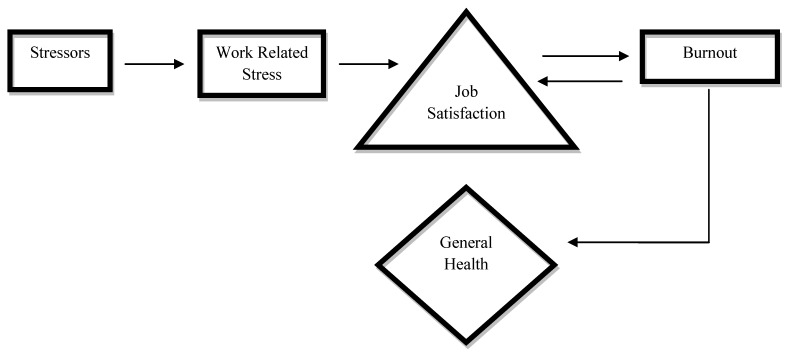
Figure 1
Full legend
A model illustrating relationships between contributing factors and health outcomes of burnout among nurses.
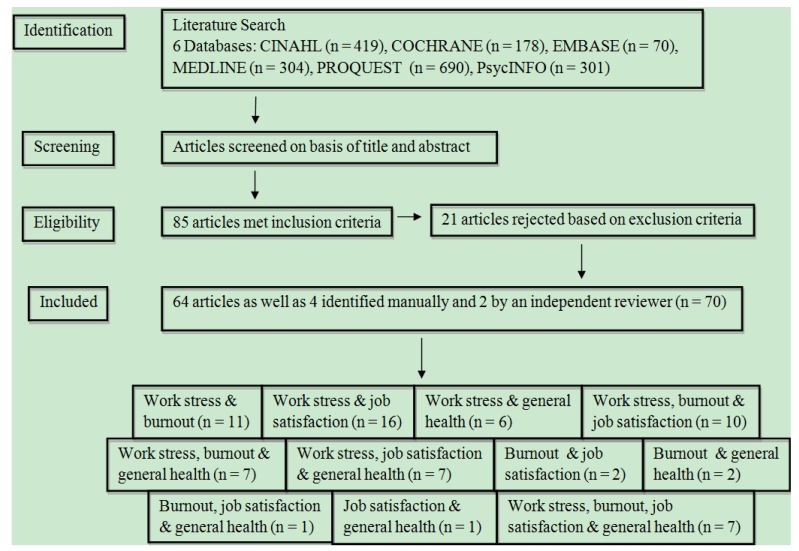
Figure 2
Full legend
A flow chart describing selection of articles using inclusion and exclusion criteria.
References93
- 1.
Maslach C., Jackson S.E. The measurement of experienced burnout. J. Occup. Behav. 1981;2:99-113.
Not in our library
- 2.
Maslach C., Jackson S.E. Maslach Burnout Inventory: Manual. 1986.
Not in our library
- 3.
Vanyperen N.W., Buunk B.P., Schaufeli W.B. Communal orientation and the burnout syndrome among nurses. J. Appl. Soc. Psychol. 1992;22:173-189.
Not in our library10.1111/j.1559-1816.1992.tb01534.x (opens in a new tab)
- 4.
Maslach C. Burnout: The Cost of Caring. 2003;25-121.
Not in our library
- 5.
Chopra S.S., Sotile W.M., Sotile M.O. Physician burnout. J. Am. Med. Assoc. 2004;291:633.
Not in our library10.1001/jama.291.5.633 (opens in a new tab)
- 6.
Rada R.E, Johnson-Leong C. Stress, burnout, anxiety and depression among dentists. J. Am. Dent. Assoc. 2004;135:788-794.
Not in our library10.14219/jada.archive.2004.0279 (opens in a new tab)
- 7.
Aiken L.H., Clarke S.P., Sloane D.M., Sochalski J., Silber J. Hospital nurse staffing and patient mortality, nurse burnout, and job dissatisfaction. J. Am. Med. Assoc. 2002;288:1987-1993.
Not in our library10.1001/jama.288.16.1987 (opens in a new tab)
- 8.
Engelbrecht M., Bester C.L., Van Den Berg H., Van Rensburg H.C.J. The Prediction of Psychological Burnout by Means of the Availability of Resources, Time Pressure or Workload, Conflict and Social Relations and Locus of Control of Professional Nurses in Public Health Centres in the Free State. proceedings of the European Applied Business Conference (EABR) and Teaching and Learning Conference (TLC).
Not in our library
- 9.
Jennings B.M., Hughes R.G. Work Stress and Burnout among Nurses: Role of the Work Environment and Working Conditions. Patient Safety and Quality: An Evidence Based Handbook for Nurses. 2008;2:137-158.
Not in our library
- 10.
Levert T., Lucas M., Ortlepp K. Burnout in psychiatric nurses: Contributions of the work environment and a sense of coherence. S. Afr. J. Psychol. 2000;30:36-41.
Not in our library
- 11.
Kalliath T., Morris R. Job satisfaction among nurses: A predictor of burnout levels. J. Nurs. Admin. 2002;32:648-651.
Not in our library10.1097/00005110-200212000-00010 (opens in a new tab)
- 12.
Turnbull J.M., Hamdy R.C., Turnbull J.M., Clark. W, Lancaster M.M. Stress in Nursing Care. Alzheimer’s Disease: A Handbook for Caregivers. 1994;319-327.
Not in our library
- 13.
Demeuroti F., Bakker A.R., Nachreiner F., Schaufeli W.B. A model of burnout and life satisfaction among nurses. J. Adv. Nurs. 2000;32:454-464.
Not in our library10.1046/j.1365-2648.2000.01496.x (opens in a new tab)
- 14.
Lim J., Bogossian F., Ahern K. Stress and coping in Australian nurses: A systematic review. Int. Nurs. Rev. 2010;57:22-31.
Not in our library10.1111/j.1466-7657.2009.00765.x (opens in a new tab)
- 15.
Nolan P., Smojkis M. The mental health of nurses in the UK. Adv. Psychiatr. Treat. 2003;9:374-379.
Not in our library
- 16.
Coyle D., Edwards D., Hannigan B., Fothergill A., Burnard P. A systematic review of stress among mental health social workers. Int. Soc. Work. 2005;48:201-211.
Not in our library
- 17.
Kohler J.M., Munz D.C., Grawitch M.J. Test of a dynamic stress model for organisational change: Do males and females require different models? Appl. Psychol. Int. Rev. 2006;55:168-191.
Not in our library10.1111/j.1464-0597.2006.00229.x (opens in a new tab)
- 18.
Peltzer K., Mashego T., Mabeba M. Short communication: Occupational stress and burnout among South African medical practitioners. Stress Health. 2003;19:275-280.
Not in our library10.1002/smi.982 (opens in a new tab)
- 19.
Rothmann S., Van Der Colff J.J., Rothmann J.C. Occupational stress of nurses in South Africa. Curationis. 2006;29:24-25.
Not in our library10.4102/curationis.v29i2.1069 (opens in a new tab)
- 20.
Lu H., Barriball K.L., Zhang X, While A.E. Job satisfaction among hospital nurses revisited: A systematic review. Int. J. Nurs. Stud. 2012;49:1017-1038.
Not in our library10.1016/j.ijnurstu.2011.11.009 (opens in a new tab)
- 21.
Toh S.G., Ang E., Devi M.K. Systematic review on the relationship between the nursing shortage and job satisfaction, stress and burnout levels among nurses in oncology/haematology settings. Int. J. Evid. Based Healthc. 2012;10:126-141.
Not in our library10.1111/j.1744-1609.2012.00271.x (opens in a new tab)
- 22.
O’Mahony N. Nurse burnout and the working environment. Emerg. Nurse. 2011;19:30-37.
Not in our library10.7748/en2011.09.19.5.30.c8704 (opens in a new tab)
- 23.
Jamal M., Baba V.V. Job stress and burnout among Canadian managers and nurses: An empirical examination. C. J. Public Health. 2000;91:454-458.
Not in our library10.1007/bf03404828 (opens in a new tab)
- 24.
Goldberg D.P., Hillier V.F. A scaled version of the General Health Questionnaire. Psychol. Med. 1979;9:139-145.
Not in our library10.1017/s0033291700021644 (opens in a new tab)
- 25.
Chayu T., Kreitler S. Burnout in nephrology nurses in Israel. Nephrol. Nurs. J. 2011;38:65-78.
Not in our library
- 26.
Lee J.S.Y., Akhtar S. Effects of the workplace social context and job content on nurse burnout. Hum. Resource Manage. 2011;50:1-19.
Not in our library
- 27.
Ohue T., Moriyama M., Nakaya T. Examination of a cognitive model of stress, burnout and intention to resign for Japanese nurses. Jpn. J. Nurs. Sci. 2011;8:76-86.
Not in our library10.1111/j.1742-7924.2010.00161.x (opens in a new tab)
- 28.
Melchior M.E.W., Van Den Berg A.A., Halfens R., Huyer Abu-Saad H., Philipsen H., Gassman P. Burnout and the work environment of nurses in psychiatric long-stay care settings. Soc. Psych. Psych. Epid. 1997;32:158-164.
Not in our library10.1007/bf00794615 (opens in a new tab)
- 29.
Hayter M. Burnout and AIDS care related factors in HIV community nurse specialists. J. Adv. Nurs. 1999;29:984-993.
Not in our library10.1046/j.1365-2648.1999.00973.x (opens in a new tab)
- 30.
Garrosa E., Rainho C., Moreno-Jimenez B., Monteiro M.J. The relationship between job stressors, hardy personality, coping resources and burnout in a sample ofnurses: A correlational study at two time points. Int. J. Nurs. Stud. 2010;47:205-215.
Not in our library10.1016/j.ijnurstu.2009.05.014 (opens in a new tab)
- 31.
Gueritault-Chalvin V., Kalichman S.C., Demi A., Peterson J.L. Work-related stress and occupational burnout in AIDS caregivers: Test of a coping model with nurses providing AIDS care. AIDS Care. 2000;12:149-161.
Not in our library10.1080/09540120050001823 (opens in a new tab)
- 32.
Patrick K., Lavery J.F. Burnout in nursing. Aust. J. Adv. Nurs. 2007;24:43-48.
Not in our library
- 33.
Wu S., Zhu W., Wang Z., Wang M., Lan Y. Relationship between burnout and occupational stress among nurses in China. J. Adv. Nurs. 2007;59:233-239.
Not in our library10.1111/j.1365-2648.2007.04301.x (opens in a new tab)
- 34.
Barnard D., Street A., Love A.W. Relationships between stressors, work supports and burnout among cancer nurses. Cancer Nurs. 2006;29:338-345.
Not in our library10.1097/00002820-200607000-00013 (opens in a new tab)
- 35.
Lasebikan V.O., Oyetunde M.O. Burnout among nurses in a Nigerian general hospital: Prevalence and associated factors. ISRN Nurs. 2012;2012:1-6.
Not in our library10.5402/2012/402157 (opens in a new tab)
- 36.
Archibald C. Job satisfaction among neonatal nurses. Pediatr. Nurs. 2006;32:176-179.
Not in our library
- 37.
Ernst M., Franco M., Messmer P.R., Gonzalez J.L. Practice applications of research. Nurses’ job satisfaction, stress and recognition in a pediatric setting. Pediatr. Nurs. 2004;30:219-227.
Not in our library10.1016/j.pediatrneurol.2003.07.007 (opens in a new tab)
- 38.
Penz K., Stewart N.J., D’Arcy C., Morgan D. Predictors of job satisfaction for rural acute care registered nurses in Canada. Western J. Nurs. Res. 2008;30:785-800.
Not in our library10.1177/0193945908319248 (opens in a new tab)
- 39.
Applebaum A., Fowler S., Fiedler N., Osinubi O., Robson M. The impact of environmental factors on nursing stress, job satisfaction and turnover intention. J. Nurs. Admin. 2010;40:323-328.
Not in our library10.1097/nna.0b013e3181e9393b (opens in a new tab)
- 40.
Chaboyer W., Williams G., Corkill W., Creamer J. Predictors of job satisfaction in remote hospital nursing. Can. J. Nurs. Leadersh. 1999;12:30-40.
Not in our library10.12927/cjnl.1999.19075 (opens in a new tab)
- 41.
Djukic M., Kovner C., Budin W.C., Norman R. Physical work environment: Testing an expanded model of job satisfaction in a sample of registered nurses. Nurs. Res. 2010;59:441-451.
Not in our library10.1097/nnr.0b013e3181fb2f25 (opens in a new tab)
- 42.
Iliopoulou K.K., While A.E. Professional autonomy and job satisfaction: Survey of critical care nurses in mainland Greece. J. Adv. Nurs. 2010;66:2520-2531.
Not in our library10.1111/j.1365-2648.2010.05424.x (opens in a new tab)
- 43.
Malliarou M., Sarafis P., Moustaka E., Kouvela T., Constantinidis T.C. Greek registered nurses’ job satisfaction in relation to work-related stress. A study on army and civilian RNs. Global J. Health Sci. 2010;2:44-60.
Not in our library
- 44.
Graham K., Davies B., Woodend K., Simpson J., Mantha S. Impacting Canadian public health nurses’ job satisfaction. C. J. Public Health. 2011;102:427-431.
Not in our library10.1007/bf03404193 (opens in a new tab)
- 45.
Healy C., McKay M.F. Nursing stress: The effects of coping strategies and job satisfaction in a sample of Australian nurses. J. Adv. Nurs. 2000;31:681-688.
Not in our library10.1046/j.1365-2648.2000.01323.x (opens in a new tab)
- 46.
Zurmehly J. The relationship of educational preparation, autonomy, and critical thinking to nursing job satisfaction. J. Contin. Educ. Nurs. 2008;39:453-460.
Not in our library10.3928/00220124-20081001-10 (opens in a new tab)
- 47.
Wanzer M., Wojtaszczyk A.M., Kelly J. Nurses’ perceptions of physicians’ communication: The relationship among communication practices, satisfaction and collaboration. Health Commun. 2009;24:683-691.
Not in our library10.1080/10410230903263990 (opens in a new tab)
- 48.
Ho W.H., Chang C.S., Shih Y.L., Liang R.D. Effects of job rotation and role stress among nurses on job satisfaction and organizational commitment. BMC Health Serv. Res. 2009;9:8.
Not in our library10.1186/1472-6963-9-8 (opens in a new tab)
- 49.
Flanagan N.A., Flanagan T.J. An analysis of the relationship between job satisfaction and job stress in correctional nurses. Res. Nurs. Health. 2002;25:282-294.
Not in our library10.1002/nur.10042 (opens in a new tab)
- 50.
Larrabee J.H., Wu Y., Persily C.A., Simoni P.S., Johnston P.A., Marcischak T.L., Mott C.L., Gladden S.D. Influence of stress resiliency on RN job satisfaction and intent to stay. Western J. Nurs. Res. 2010;32:81-102.
Not in our library10.1177/0193945909343293 (opens in a new tab)
- 51.
Cangelosi J., Markham F., Bounds W. Factors related to nurse retention and turnover: An updated study. Health Mark. Q. 1998;15:25-43.
Not in our library10.1300/j026v15n03_02 (opens in a new tab)
- 52.
Piko B.F. Psychosocial work environment and psychosomatic health of nurses in Hungary. WorkStress. 2003;17:93-100.
Not in our library
- 53.
Lin K.C., Huang C.C., Wu C.C. Association between stress at work and primary headache among nursing staff in Taiwan. Headache. 2007;47:576-584.
Not in our library10.1111/j.1526-4610.2007.00759.x (opens in a new tab)
- 54.
Malinauskienė V., Leišytė P., Malinauskas R. Psychosocial job characteristics, social support, and sense of coherence as determinants of mental health among nurses. Med. Lith. 2009;45:910-917.
Not in our library
- 55.
Lambert V.A., Lambert C.E., Petrini M., Li X.M., Zhang Y.J. Predictors of physical and mental health in hospital nurses within the People’s Republic of China. Int. Nurs. Rev. 2007;54:85-91.
Not in our library10.1111/j.1466-7657.2007.00512.x (opens in a new tab)
- 56.
Boey K.W., Chan K.B., Ko Y.C., Goh C.G., Lim G.C. Work stress and psychological well-being among nursing professionals in Singapore. Singap. Med. J. 1997;38:256-260.
Not in our library
- 57.
Tucker S.J., Harris M.R., Pipe T.B., Stevens S.R. Nurses’ ratings of their health and professional work environments. Am. Assoc. Occ. Health Nurses J. 2010;58:253-267.
Not in our library10.3928/08910162-20100526-03 (opens in a new tab)
- 58.
McHugh M.D., Kutney-Lee A., Cimiotti J., Sloane D.M., Aiken L.H. Nurses’ widespread job dissatisfaction, burnout, and frustration with health benefits signal problems for patient care. Health Affair. 2011;2:202-210.
Not in our library10.1377/hlthaff.2010.0100 (opens in a new tab)
- 59.
Liu K., You L.M., Chen S.X., Hao Y.T., Zhu X.W., Zhang L.F., Aiken L.H. The relationship between hospital work environment and nurse outcomes in Guangdong, China: A nurse questionnaire survey. J. Clin. Nurs. 2012;21:1476-1485.
Not in our library10.1111/j.1365-2702.2011.03991.x (opens in a new tab)
- 60.
Kiekkas P., Spyratos F., Lampa E., Aretha D., Sakellaropoulos G.C. Level and correlates of burnout among orthopaedic nurses in Greece. Orthop. Nurs. 2010;29:203-209.
Not in our library10.1097/nor.0b013e3181db53ff (opens in a new tab)
- 61.
Cho S.H., June K.J., Kim Y.M., Cho Y.A., Yoo C.S., Yun S.C., Sung Y.H. Nurse staffing, quality of nursing care and nurse job outcomes in intensive care units. J. Clin. Nurs. 2009;18:1729-1737.
Not in our library10.1111/j.1365-2702.2008.02721.x (opens in a new tab)
- 62.
Sheward L., Hunt J., Hagen S., Macleod M., Ball J. The relationship between UK hospital nurse staffing and emotional exhaustion and job dissatisfaction. J. Nurs. Manage. 2005;13:51-60.
Not in our library10.1111/j.1365-2834.2004.00460.x (opens in a new tab)
- 63.
Bogaert P.V., Meulemans H., Clarke S., Vermeyen K., van de Heyning P. Hospital nurse practice environment, burnout, job outcomes and quality of care: Test of a structural equation model. J. Adv. Nurs. 2009;65:2175-2185.
Not in our library10.1111/j.1365-2648.2009.05082.x (opens in a new tab)
- 64.
Bogaert P.V., Clarke S., Vermeyen K., Meulemans H., van de Heyning P. Practice environments and their associations with nurse-reported outcomes in Belgian hospitals: Development and preliminary validation of a Dutch adaptation of the Revised Nursing Work Index. Int. J. Nurs. Stud. 2009;46:55-65.
Not in our library10.1016/j.ijnurstu.2008.07.009 (opens in a new tab)
- 65.
Bogaert P.V., Clarke S., Roelant E., Meulemans H., van de Heyning P. Impacts of unit-level nurse practice environment and burnout on nurse-reported outcomes: A multilevel modelling approach. J. Clin. Nurs. 2010;19:1664-1674.
Not in our library10.1111/j.1365-2702.2009.03128.x (opens in a new tab)
- 66.
Klopper H.C., Coetzee S.K., Pretorius R., Bester P. Practice environment, job satisfaction and burnout of critical care nurses in South Africa. J. Nurs. Manage. 2012;20:685-695.
Not in our library10.1111/j.1365-2834.2011.01350.x (opens in a new tab)
- 67.
van Servellen G., Topf M., Leake B. Personality hardiness, work-related stress, and health in hospital nurses. Hosp. Top. 1994;72:34-39.
Not in our library10.1080/00185868.1994.9948484 (opens in a new tab)
- 68.
van Tooren M., de Jonge J. Managing job stress in nursing: What kind of resources do we need? J. Adv. Nurs. 2008;63:75-84.
Not in our library10.1111/j.1365-2648.2008.04657.x (opens in a new tab)
- 69.
Jourdain G., Chenevert D. Job demands-resources, burnout and intention to leave the nursing profession: A questionnaire study. Int. J. Nurs. Stud. 2010;47:709-722.
Not in our library10.1016/j.ijnurstu.2009.11.007 (opens in a new tab)
- 70.
Bressi C., Manenti S., Porcellana M., Cevales D., Farina L., Felicioni I., Meloni G., Milone G., Miccolis I.R., Pavanetto M., et al. Haemato-oncology and burnout: An Italian survey. Brit. J. Cancer. 2008;98:1046-1052.
Not in our library10.1038/sj.bjc.6604270 (opens in a new tab)
- 71.
Hillhouse J.J., Adler C. Evaluating a simple model of work, stress, burnout, affective and physical symptoms in nurses. Psychol. Health Med. 1996;1:297-306.
Not in our library10.1080/13548509608402226 (opens in a new tab)
- 72.
Sortet J., Banks S. Hardiness, job stress and health in nurses. Hosp. Top. 1996;74:28-33.
Not in our library10.1080/00185868.1996.11736054 (opens in a new tab)
- 73.
Bourbonnais R., Comeau M., Vézina M., Dion G. Job strain, psychological distress, and burnout in nurses. Am. J. Ind. Med. 1998;34:20-28.
Not in our library10.1002/(sici)1097-0274(199807)34:1<20::aid-ajim4>3.0.co;2-u (opens in a new tab)
- 74.
Baglioni A.J., Cooper C.L., Hingley P. Job stress, mental health and job satisfaction among U.K. senior nurses. Stress Med. 1990;6:9-20.
Not in our library10.1002/smi.2460060104 (opens in a new tab)
- 75.
Landerweerd J.A., Boumans N.P.G. The effect of work dimensions and need for autonomy on nurses’ work satisfaction and health. J. Occup. Organ. Psych. 1994;67:207-218.
Not in our library
- 76.
Tummers G.E.R., Landeweerd J.A., Merode G.V. Organization, work and work reactions: A study of the relationship between organizational aspects of nursing and nurses’ work characteristics and work reactions. Scand. J. Caring Sci. 2002;16:52-58.
Not in our library10.1046/j.1471-6712.2002.00050.x (opens in a new tab)
- 77.
Decker F.H. Occupational and non occupational factors in job satisfaction and psychological distress among nurses. Res. Nurs. Health. 1997;20:453-464.
Not in our library10.1002/(sici)1098-240x(199710)20:5<453::aid-nur9>3.0.co;2-n (opens in a new tab)
- 78.
Engström M., Ljunggren B., Lindqvist R., Carlsson M. Staff satisfaction with work, perceived quality of care and stress in elderly care: Psychometric assessments and associations. J. Nurs. Manage. 2006;14:318-328.
Not in our library10.1111/j.1365-2934.2006.00625.x (opens in a new tab)
- 79.
Piko B.F. Work related stress among nurses: A challenge for health care institutions. J. R. Soc. Promo. Health. 1999;119:156-162.
Not in our library10.1177/146642409911900304 (opens in a new tab)
- 80.
Adriaenssens J., Gucht V.M.J., Doef M.P., Maes S. Exploring the burden of emergency care: Predictors of stress-health outcomes in emergency nurses. J. Adv. Nurs. 2011;67:1317-1328.
Not in our library10.1111/j.1365-2648.2010.05599.x (opens in a new tab)
- 81.
Önder C., Basim N. Examination of developmental models of occupational burnout using burnout profiles of nurses. J. Adv. Nurs. 2008;64:514-523.
Not in our library10.1111/j.1365-2648.2008.04818.x (opens in a new tab)
- 82.
Iacovides A., Fountoulakis K.N., Moysidou C., Ierodiakonou C. Burnout in nursing staff: Is there a relationship between depression and burnout? Int. J. Psychiat. Med. 1999;29:421-433.
Not in our library10.2190/5yhh-4cvf-99m4-mj28 (opens in a new tab)
- 83.
Tselebis A., Moulou A., Ilias I. Burnout versus depression and sense of coherence: Study of Greek nursing staff. Nurs. Health Sci. 2001;3:69-71.
Not in our library10.1046/j.1442-2018.2001.00074.x (opens in a new tab)
- 84.
Tourigny L., Baba V.V., Wang X. Burnout and depression among nurses in Japan and China: The moderating effects of job satisfaction and absence. Int. J. Hum. Resour. Man. 2010;21:2741-2761.
Not in our library
- 85.
Amati M., Tomasetti M., Ciuccarelli M., Mariotti L., Tarquini L.M., Bracci M., Baldassari M., Balducci C., Alleva R., Borghi B., et al. Relationship of job satisfaction, psychological distress and stress-related biological parameters among healthy nurses: A longitudinal study. J. Occup. Health. 2010;52:31-38.
Not in our library10.1539/joh.l9042 (opens in a new tab)
- 86.
Tummers G.E.R., Landeweerd J.A., van Merode G.G. Work organization, work characteristics and their psychological effects on nurses in the Netherlands. Int. J. Stress. Manage. 2002;9:183-206.
Not in our library
- 87.
Buerhaus P.I., Donelan K., Ulrich B.T., Kirby L., Norman L., Dittus R. Registered nurses’ perceptions of nursing. Nurs. Econ. 2005;23:110-118.
Not in our library
- 88.
Gelsema T.I., van Doef M., Maes S., Akerboom S., Verhoeven C. Job stress in the nursing profession: The influence of organizational and environmental conditions and job characteristics. Int. J. Stress Manage. 2005;12:222-240.
Not in our library
- 89.
Jamal M., Baba V.V. Shiftwork, burnout and well-being: A study of Canadian nurses. Int. J. Stress Manage. 1997;4:197-204.
Not in our library
- 90.
Bekker M.H.J., Croon M.A., Bressers B. Childcare involvement, job characteristics, gender and work attitudes as predictors of emotional exhaustion and sickness absence. Work Stress. 2005;19:221-237.
Not in our library10.1080/02678370500286095 (opens in a new tab)
- 91.
Van Der Doef M., Mbazzi F.B., Verhoeven C. Job conditions, job satisfaction, somatic complaint and burnout among East African nurses. J. Clin. Nurs. 2012;21:1763-1775.
Not in our library10.1111/j.1365-2702.2011.03995.x (opens in a new tab)
- 92.
Maslach C., Leiter M.P. The Truth About Burnout: How Organisations Cause Personal Stress and What To Do About It. 1997.
Not in our library
- 93.
Hickman D., Severance S., Feldstein A. The Effect of Health Care Working Conditions on Patient Safety. 2003.
Not in our library
Cited by papers we hold8
Reads
Read by people on this page
None yet.
Checked or read by AI through naulon
None yet.
A person counts once a day per paper. We keep no cookie and no address: a reader is a hash that changes every day. Any month under five reads shows no number.
Are you an author?
Is this your paper?
Claim it to add your note and be paid when agents cite it. Free.