Data Resource Profile: The Scottish National Prescribing Information System (PIS)
Samantha Alvarez-Madrazo, Stuart McTaggart, Clifford Nangle and 2 more
International Journal of Epidemiology · 2016
doi:10.1093/ije/dyw060 (opens in a new tab)
We email you when a new notice or a question about this paper appears.
Abstract
The Prescribing Information System (PIS) provides an infrastructure for pharmacoepidemiology and pharmacovigilance research, attracting growing attention due to its unique combination of characteristics. Compared with several databases worldwide offering national population coverage and record linkage, 1–3 PIS covers all National Health Service (NHS) prescriptions prescribed, dispensed and reimbursed within the community setting, covering in Scotland a total population of 5.3 million residents. PIS provides summary information on reimbursed medicines from 1993, and it also gives access to individual prescribing and dispensing data since 2009 with the incorporation in the system of a unique number, specific to NHS Scotland, called the Community Health Index (CHI) number (the PIS evolution process is shown in Supplementary Figure 1 , available as Supplementary data at IJE online). Moreover, the presence of this number allows the linkage of PIS data to other health records data, thus describing a patient’s pathway through the healthcare system. This dataset addresses the demand for longitudinal data at a population level, captured through routine clinical systems required to understand the chronology of drug use and health outcomes, complementing the evidence generated through clinical trials and drug surveillance schemes. 4–6 PIS holds information for over 1.6 billion prescriptions reimbursed in the community from January 1993 to 2014, over 507 million items prescribed and over 344 million items dispensed from 2009 to 2014. 7 The CHI capture rate, which shows the availability of patient-level data, is almost 100% for the prescribed and dispensed items. Only those with an invalid CHI are not included. For the reimbursed items, the rate has increased from 87.7% in 2009 up to 95.6% in 2014. In addition to items per patient, PIS also covers information on active NHS prescribers and approximately 1200 community pharmacies. In the calendar year of 2014, more than 70% of all men and 85% of all women had one or more prescriptions reimbursed. The proportion is similar in children (0–4 years) and people > 65 years old, regardless of gender. However, there is a higher proportion of adult women in the population with reimbursed prescriptions than men ( Figure 1 ). Demographic characteristics of patients in PIS with a reimbursed prescription in 2014. PIS is an NHS data system and is funded from the public monies available to the NHS. It is hosted within a national information warehouse managed by NHS National Services Scotland (NHS NSS). Current work to develop an improved PIS research-ready analysis platform is supported by the Farr Institute @ Scotland and its 10-funder consortium. Research studies using PIS, as well as other datasets, are funded by a variety of sources including the Farr Institute, Chief Scientist Office, Medical Research Councils and UK charities. Figure 2 illustrates the sustainable journey of collecting, prescribing and dispensing raw data at a population level from three data sources—ePrescribed, eDispensed and Reimbursed messages—which form the basis of PIS, and the data available for the researcher community. PIS prescribing, dispensing and reimbursed data from raw (2014) to researcher – ready access. Prescriptions are written by a range of healthcare practitioners including general practitioners (GPs), nurses, dentists, pharmacists and an expanding range of other non-medical prescribers. In all cases, a paper form is provided to the patient that they may take to the pharmacy of their choice. In the case of GP prescribing, an electronic prescription message (ePrescribed) is also generated and, where this is the case, the dispensing pharmacist has the option to also submit an electronic dispensed message (eDispensed) to support the claim for reimbursement. Once the prescription has been dispensed by the pharmacy and collected by the patient, the paper forms are submitted in monthly batches to NHS NSS for reimbursement. Information from the paper form is captured by high-speed scanners using optical character recognition, supplemented by human operators. Where electronic messages also exist for the prescription, then these act as the primary source of information in preference to that captured by scanning. The output from this process forms the reimbursed message. As GPs account for more than 95% of prescribing in primary care, the great majority of prescriptions processed have at least one accompanying electronic source. Data extracts of PIS can be made available for researchers upon request, subject to relevant governance approval. Data generation takes place as part of routine prescribing by health professionals and dispensing in the community pharmacies in Scotland. The frequency of data generation is determined by the needs and conditions of the patient, but long-term repeat medicines are typically prescribed and dispensed at 28- or 56-day intervals. Reimbursement data are processed and loaded on a monthly cycle and are available approximately 2 months after the prescription was dispensed and collected by the patient. The ePrescribed and eDispensed data are loaded daily and are available 24 h and 14 days after the prescription was written and dispensed, respectively. Data variables included in PIS fall into four main categories: (i) patient-specific data; (ii) prescriber data; (iii) dispenser data; and (iv) drug data. More detailed information about the PIS fields for researchers is available from the Information Services Division Scotland website. 8 Patients included in the database are identified by their community health index (CHI) number. As well as age and gender, CHI enables the prescription record to be populated with data from the CHI national register when requested. This register defines the patient’s place of residence and indicates whether or not the patient is in a care home. Geography-related information, such as the Scottish Index of Multiple Deprivation (SIMD) ranking and urban/rural classification, is also available. Prescribers have a unique identifier that identifies the profession and the location where the prescription was written. For GP practices, the number and demographics of the registered patients is also available. Each dispensing organization is assigned a dispenser type, e.g. community pharmacy, and geographical location. For each reimbursed prescription, individual variables describing the approved name (normally International Nonproprietary Names (INN)), product name, formulation and strength are available. Quantity information is available as number of tablets, etc., supplied and also expressed in defined daily doses (DDDs). Information is also available about instalment dispensing and the number of instalments, including how many were supervised (e.g. opiate substitution therapy). The database captures information from the time the drug is prescribed to the time (whether or not) it has been dispensed or reimbursed. Each drug product is also identifiable by an extended BNF ( British National Formulary ) code. 9 This is a structured code that classifies medicines according to therapeutic use as described in the BNF , 10 and the extended code differentiates between proprietary and generic products and formulation and strength. Drug data within ePrescribed and eDispensed messages are expressed using codes and descriptions from the NHS dictionary of medicines and devices (dm+d), which is a UK extension of SNOMED-CT. 11 In addition, electronic messages include the prescribed dose instructions, as free text, and so these are also available for reimbursed prescriptions for which an electronic message exists. The CHI number is a unique numeric identifier, allocated to each patient on first registration with the Scottish healthcare datasets, but not social datasets. It is a 10-character code consisting of the 6-digit date of birth (DDMMYY), two digits, a 9th digit which is always even for females and odd for males and an arithmetical check digit. 12 The inclusion of this unique identifier in PIS allows for accurate health data linkage at an individual level with well-coded national and local databases, enabling studies to be conducted across the entire lifespan of individuals and populations. Further detail on the national databases catalogue, including hospital records (SMR00 and SMR01), maternal and neonatal records (SMR02), the Scottish Cancer Registry (SMR06) and mortality records, is available at [ www.ndc.scot.nhs.uk ]. Subject to approval by the Public Benefit and Privacy Panel for Health and Social Care (PBPP), other external datasets, e.g. clinical trials, local health board data, disease registries and non-health administrative data, can also be linked. To comply with information governance procedures and preserve patients’ confidentiality, the OECD Guidelines on Human Biobanks and Genetic Research Databases 13 are followed and the electronic Data Research and Innovation Service (eDRIS) team provides pseudo-anonymized data extracts for researchers’ use. CHI numbers are replaced by unique study numbers and personal identifying information is removed. This is achieved in a secure manner by having different teams handling patient identifiers and study variables, and then performing the linkage. 14 Having national datasets with an outstanding quality of recording events such as hospitalizations, surgical procedures and underlying causes of mortality, record linkage has successfully been carried out in Scotland in areas such as diabetes. 15 This goes along the same lines of successful record-linkage programmes in the UK, done with other data resources focusing on cardiovascular diseases, primary care and a subset of dispensed or prescribed prescriptions in the population. 16,17 PIS has the flexibility to be used as a stand-alone dataset or connected to further datasets by using electronic record linkage. Cohorts can either be identified according to the type of drug
Full text
From PubMed Central, U.S. National Library of Medicine, as current on Oct 26, 2026. Paragraph numbers are ours, so an answer can point at one.
Data resource basics
The Prescribing Information System (PIS) provides an infrastructure for pharmacoepidemiology and pharmacovigilance research, attracting growing attention due to its unique combination of characteristics. Compared with several databases worldwide offering national population coverage and record linkage, PIS covers all National Health Service (NHS) prescriptions prescribed, dispensed and reimbursed within the community setting, covering in Scotland a total population of 5.3 million residents.
PIS provides summary information on reimbursed medicines from 1993, and it also gives access to individual prescribing and dispensing data since 2009 with the incorporation in the system of a unique number, specific to NHS Scotland, called the Community Health Index (CHI) number (the PIS evolution process is shown in Supplementary Figure 1, available as Supplementary data at IJE online). Moreover, the presence of this number allows the linkage of PIS data to other health records data, thus describing a patient’s pathway through the healthcare system. This dataset addresses the demand for longitudinal data at a population level, captured through routine clinical systems required to understand the chronology of drug use and health outcomes, complementing the evidence generated through clinical trials and drug surveillance schemes.
Data resources and population coverage
PIS holds information for over 1.6 billion prescriptions reimbursed in the community from January 1993 to 2014, over 507 million items prescribed and over 344 million items dispensed from 2009 to 2014. The CHI capture rate, which shows the availability of patient-level data, is almost 100% for the prescribed and dispensed items. Only those with an invalid CHI are not included. For the reimbursed items, the rate has increased from 87.7% in 2009 up to 95.6% in 2014. In addition to items per patient, PIS also covers information on active NHS prescribers and approximately 1200 community pharmacies. In the calendar year of 2014, more than 70% of all men and 85% of all women had one or more prescriptions reimbursed. The proportion is similar in children (0–4 years) and people > 65 years old, regardless of gender. However, there is a higher proportion of adult women in the population with reimbursed prescriptions than men ( Figure 1 ).
Funding sources
PIS is an NHS data system and is funded from the public monies available to the NHS. It is hosted within a national information warehouse managed by NHS National Services Scotland (NHS NSS). Current work to develop an improved PIS research-ready analysis platform is supported by the Farr Institute @ Scotland and its 10-funder consortium. Research studies using PIS, as well as other datasets, are funded by a variety of sources including the Farr Institute, Chief Scientist Office, Medical Research Councils and UK charities.
Dataset production
Figure 2 illustrates the sustainable journey of collecting, prescribing and dispensing raw data at a population level from three data sources—ePrescribed, eDispensed and Reimbursed messages—which form the basis of PIS, and the data available for the researcher community.
Prescriptions are written by a range of healthcare practitioners including general practitioners (GPs), nurses, dentists, pharmacists and an expanding range of other non-medical prescribers. In all cases, a paper form is provided to the patient that they may take to the pharmacy of their choice. In the case of GP prescribing, an electronic prescription message (ePrescribed) is also generated and, where this is the case, the dispensing pharmacist has the option to also submit an electronic dispensed message (eDispensed) to support the claim for reimbursement. Once the prescription has been dispensed by the pharmacy and collected by the patient, the paper forms are submitted in monthly batches to NHS NSS for reimbursement. Information from the paper form is captured by high-speed scanners using optical character recognition, supplemented by human operators. Where electronic messages also exist for the prescription, then these act as the primary source of information in preference to that captured by scanning. The output from this process forms the reimbursed message. As GPs account for more than 95% of prescribing in primary care, the great majority of prescriptions processed have at least one accompanying electronic source. Data extracts of PIS can be made available for researchers upon request, subject to relevant governance approval.
Frequency of data collection
Data generation takes place as part of routine prescribing by health professionals and dispensing in the community pharmacies in Scotland. The frequency of data generation is determined by the needs and conditions of the patient, but long-term repeat medicines are typically prescribed and dispensed at 28- or 56-day intervals. Reimbursement data are processed and loaded on a monthly cycle and are available approximately 2 months after the prescription was dispensed and collected by the patient. The ePrescribed and eDispensed data are loaded daily and are available 24 h and 14 days after the prescription was written and dispensed, respectively.
Measures
Data variables included in PIS fall into four main categories: (i) patient-specific data; (ii) prescriber data; (iii) dispenser data; and (iv) drug data. More detailed information about the PIS fields for researchers is available from the Information Services Division Scotland website.
Patient-specific data
Patients included in the database are identified by their community health index (CHI) number. As well as age and gender, CHI enables the prescription record to be populated with data from the CHI national register when requested. This register defines the patient’s place of residence and indicates whether or not the patient is in a care home. Geography-related information, such as the Scottish Index of Multiple Deprivation (SIMD) ranking and urban/rural classification, is also available.
Prescriber data
Prescribers have a unique identifier that identifies the profession and the location where the prescription was written. For GP practices, the number and demographics of the registered patients is also available.
Dispenser data
Each dispensing organization is assigned a dispenser type, e.g. community pharmacy, and geographical location.
Drug data
For each reimbursed prescription, individual variables describing the approved name (normally International Nonproprietary Names (INN)), product name, formulation and strength are available. Quantity information is available as number of tablets, etc., supplied and also expressed in defined daily doses (DDDs). Information is also available about instalment dispensing and the number of instalments, including how many were supervised (e.g. opiate substitution therapy). The database captures information from the time the drug is prescribed to the time (whether or not) it has been dispensed or reimbursed. Each drug product is also identifiable by an extended BNF ( British National Formulary ) code. This is a structured code that classifies medicines according to therapeutic use as described in the BNF, and the extended code differentiates between proprietary and generic products and formulation and strength.
Drug data within ePrescribed and eDispensed messages are expressed using codes and descriptions from the NHS dictionary of medicines and devices (dm+d), which is a UK extension of SNOMED-CT. In addition, electronic messages include the prescribed dose instructions, as free text, and so these are also available for reimbursed prescriptions for which an electronic message exists.
Data linkage
The CHI number is a unique numeric identifier, allocated to each patient on first registration with the Scottish healthcare datasets, but not social datasets. It is a 10-character code consisting of the 6-digit date of birth (DDMMYY), two digits, a 9th digit which is always even for females and odd for males and an arithmetical check digit. The inclusion of this unique identifier in PIS allows for accurate health data linkage at an individual level with well-coded national and local databases, enabling studies to be conducted across the entire lifespan of individuals and populations. Further detail on the national databases catalogue, including hospital records (SMR00 and SMR01), maternal and neonatal records (SMR02), the Scottish Cancer Registry (SMR06) and mortality records, is available at [ www.ndc.scot.nhs.uk ]. Subject to approval by the Public Benefit and Privacy Panel for Health and Social Care (PBPP), other external datasets, e.g. clinical trials, local health board data, disease registries and non-health administrative data, can also be linked.
To comply with information governance procedures and preserve patients’ confidentiality, the OECD Guidelines on Human Biobanks and Genetic Research Databases are followed and the electronic Data Research and Innovation Service (eDRIS) team provides pseudo-anonymized data extracts for researchers’ use. CHI numbers are replaced by unique study numbers and personal identifying information is removed. This is achieved in a secure manner by having different teams handling patient identifiers and study variables, and then performing the linkage.
Having national datasets with an outstanding quality of recording events such as hospitalizations, surgical procedures and underlying causes of mortality, record linkage has successfully been carried out in Scotland in areas such as diabetes. This goes along the same lines of successful record-linkage programmes in the UK, done with other data resources focusing on cardiovascular diseases, primary care and a subset of dispensed or prescribed prescriptions in the population.,
Data resource use
PIS has the flexibility to be used as a stand-alone dataset or connected to further datasets by using electronic record linkage. Cohorts can either be identified according to the type of drug/drug group of interest or patient groups can be selected according to disease or other characteristics, and using record linkage their prescriptions in primary care can be studied. The possibility of creating groups is not limited to those receiving a prescription or in PIS as, in addition, matched (or unmatched) control groups—e.g. from the CHI registry or other external datasets—can also be created. Table 1 provides examples of studies conducted using PIS, ranging from drug use to evaluation of drug effects, guidance about drug prescribing and health economics. By example, the knowledge generated from PIS has already generated a change in the Scottish national antibiotic policy recommendation for orthopaedic surgical prophylaxis and has been used to evaluate interventions to improve high-risk prescribing in primary care.,,
Current developments
The FARR Institute @ Scotland, an NHS/academic collaboration, is enabling new datasets for research and improved patient care including PIS, alongside a new national GP primary care dataset (SPIRE), imaging (PACS Images) and laboratory dataset (SCI-Store)., The investment in PIS is supporting improved drug coding and connection to Anatomical Chemical Classification (ATC) coding to support cross-national studies, as well as transformation of drug dosage instructions into structured fields to support the interpretation and quantification of drug exposure and measurement of patient adherence. A prototype algorithm has been developed and tested in response to the demand for drug dosage metadata.
Further development is underway to apply the algorithm to all prescription instructions held within PIS, thereby enabling direct querying of data by drug dose, unit and frequency of expected consumption. This work has supported a preferred partner status for future rapid pharmacovigilance studies in collaboration with the European Medicines Agency.
Coverage
The NHS in Scotland is a publicly-funded healthcare system and is universally used by the 5.3 million people living in Scotland. The dataset can be censored for death and patients who have de-registered with the NHS in Scotland, through linkage to other datasets. The NHS in Scotland provides universal coverage; thus PIS is representative of all age, sex and socioeconomic groups and geographies, is free from any selection bias and allows for the detection of rare events.
By the end of 2014, 95% of records captured included the unique person identifier, and so data from PIS can be accurately linked to a wide range of other health and non-health datasets.
PIS is one of the few nationwide databases which include routinely collected data on prescribed items and whether they were dispensed and reimbursed or not. This offers the possibility of studying treatment regimens and their outcomes in the population, polypharmacy and primary non-adherence although, in common with most other prescription registries, there is no information about when or whether the patient actually consumed the dispensed medicine.
Another feature of its coverage is the availability of drug dosage information, which is necessary for studies with dose-dependent association between exposure and effect.
Completeness
Prescriptions must be submitted for payment in order that the dispenser can be reimbursed for the products supplied, providing a strong incentive to do so. Data therefore have a high level of completeness. However, although the availability of individual level data is high, this is influenced by the type of health care practitioner prescribing and/or service delivery models: in 2014, CHI capture by healthcare practitioner varied from 98.7% for GP prescribers to 1.6% for dentists; and for the same year, the CHI capture rate of immunological products and vaccines was 71.5% compared with 98.6% for cardiovascular medicines. Further data processing by researchers may be required according to the completeness for specific studies.
Data quality
The capture by PIS of electronic prescription and dispensing messages has resulted in an improvement in data quality by removing the majority of manual data entry processes. In addition, the millions of raw records go through more than 10 stages of quality checking before and after they are submitted to PIS.
Follow up
Longitudinal studies are feasible, both for cohorts and for follow-up to clinical trials, thus enabling research about use of medicines and healthcare resources in chronic conditions as well as monitoring long-term outcomes. Considering 2009 as the year in which CHI capture increased, the present median follow-up is 6–7 years per patient.
Data not captured
PIS does not capture information about retail sales of over-the-counter (OTC) medicines. It does however include supplies of OTC medicines made to eligible individuals by community pharmacists under the Minor Ailments Service (MAS). Medicines administered during inpatient hospital stays and upon discharge for short-term use, and some specialist drugs for chronic use such as biologicals and growth hormone therapy are not captured, nor are outpatient supplies made by the hospital service. Information about vaccines is variable: some of this is captured through an alternative childhood immunization database.
There is no information about diagnosis or indication for treatment included on prescriptions, and so this information is not available in PIS. Data from primary care (SPIRE) may become available for linkage. In many cases this limitation can be overcome by linkage to secondary care or local datasets, and case identification can be optimized with the corresponding algorithm as has been done in other data resources.,
Data availability
More than 87% capture of the patient identifier was achieved in 2009, but this figure falls away rapidly from 68% in 2008 to less than 1% in 2003. Therefore longitudinal studies with PIS individual-level data are recommended from 2009 onwards. PIS currently is suitable for most research purposes; however, the processing lag and variation in the frequency of data loads means that it is unable to support real-time medication reconciliation studies.
Data resource access
Researchers can access non-identifiable (but linkable) data from PIS by contacting the eDRIS service run by NHS NSS [ www.isdscotland.org/Products-and-Services/eDRIS/ ]. Each research proposal is assigned an experienced research coordinator who will guide the research team through the selection of appropriate data items and any limitations applicable to the proposed study, as well as guidance on completion of the PBPP application process for approval to link data. Once the requested data are approved by the PBPP, data are extracted and provided to researchers through personal accounts in national or local research portals (safe havens) with secure access and storage., Currently PIS data are available to researchers based in recognized UK institutions. The PBPP can consider on a case-by-case basis to provide data outside the UK. For more information regarding application and costs, contact the eDRIS team at [NSS.eDRIS@nhs.net].
Funding
This study was supported by the Farr Institute (grant no. MR/K007017/1). The Farr Institute @ Scotland is supported by a 10-funder consortium: Arthritis Research UK, the British Heart Foundation, Cancer Research UK, the Economic and Social Research Council, the Engineering and Physical Sciences Research Council, the Medical Research Council, the National Institute of Health Research, the National Institute for Social Care and Health Research (Welsh Assembly Government), the Chief Scientist Office (Scottish Government Health Directorates) and the Wellcome Trust.
In 2009, the Prescribing Information System (PIS) was developed as a national individual-level dataset of prescriptions prescribed, dispensed and reimbursed within the community setting in Scotland, covering the 5.3 million residents.
The dataset provides information about patient, prescriber and dispenser characteristics, and the drugs prescribed, dispensed and reimbursed (> 98% of the items prescribed by general practitioners have individual-level records).
The availability of aggregated and patient-level data, linkable to a variety of local and national databases, supports retrospective and prospective pharmacoepidemiological studies at different levels of complexity.
Evolving PIS developments (including enhanced drug coding and interpretable dose instructions) will provide better intelligence on the safety and effectiveness of medicines in routine clinical practice.
Data are available upon request to the electronic Data Research and Innovation Service [NSS.eDRIS@nhs.net].
Figures2
From PubMed Central, U.S. National Library of Medicine.
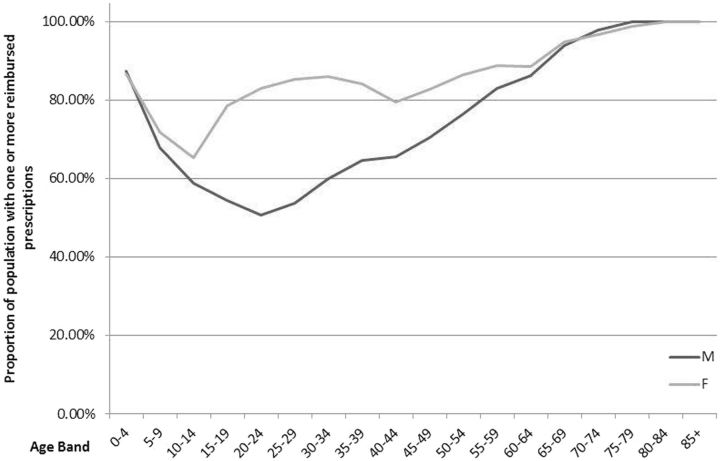
Figure 1.
Full legend
Demographic characteristics of patients in PIS with a reimbursed prescription in 2014.
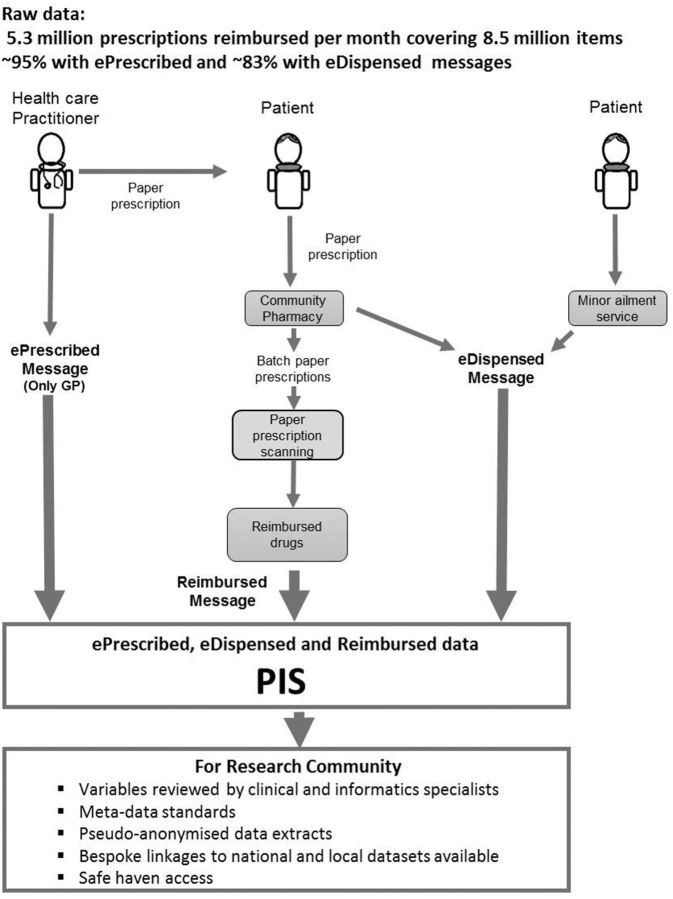
Figure 2.
Full legend
PIS prescribing, dispensing and reimbursed data from raw (2014) to researcher – ready access.
References46
- 1.
Strom BL Kimmel SE Hennessy S (eds). 5th edn. Part III: Sources of data for pharmacoepidemiologic studies, Section B: Automated data systems. In: Pharmacoepidemiology. Chichester, UK: Wiley, 2012.
Not in our library
- 2.
Andersen M Bergman U Choi NK. The Asian Pharmacoepidemiology Network (AsPEN): promoting multi-national collaboration for pharmacoepidemiologic research in Asia. Pharmacoepidemiol Drug Saf2013; 22: 700 – 04.
Not in our library10.1002/pds.3439 (opens in a new tab)
- 3.
Ferrer P Ballarin E Sabate M. Sources of European drug consumption data at a country level. Int J Public Health2014; 59: 877 – 87.
Not in our library10.1007/s00038-014-0564-8 (opens in a new tab)
- 4.
Angus DC. Fusing randomized trials with big data: the key to self-learning health care systems?. JAMA2015; 314: 767 – 68.
Not in our library10.1001/jama.2015.7762 (opens in a new tab)
- 5.
Concato J Shah N Horwitz RI. Randomized, controlled trials, observational studies, and the hierarchy of research designs. N Engl J Med2000; 342: 1887 – 92.
Not in our library10.1056/nejm200006223422507 (opens in a new tab)
- 6.
Trifiro G Coloma PM Rijnbeek PR. Combining multiple healthcare databases for postmarketing drug and vaccine safety surveillance: why and how?J Intern Med2014; 275: 551 – 61.
Not in our library10.1111/joim.12159 (opens in a new tab)
- 7.
Information Services Division. Prescribing Information System. UK: National Services Scotland, 2014.
Not in our library
- 8.
Information Services Division. PIS Fields for Researchers v5 eDRIS Guidance. UK: National Services Scotland, 2015.h http://www.isdscotland.org/Health-Topics/Prescribing-and-Medicines/Prescribing-Datamarts/docs/PIS_fields_for_researchers_v5_eDRIS%20Guidance.pdf (25 November 2015, date last accessed).
Not in our library
- 9.
NHS Prescription Services. BNF Classification and Pseudo classification used by NHS Prescription Services. Newcastle upon Tyne, UK: NHS Business Services Authority, 2010. Available from: http://www.nhsbsa.nhs.uk/PrescriptionServices/Documents/BNF_Classification_Booklet_2009.pdf (8 October 2015, last date accessed).
Not in our library
- 10.
British National Formulary. London: BMJ Group and Pharmaceutical Press, 2015.
Not in our library
- 11.
The UK Standard Clinical Products Reference Source Programme (UKCPRS). NHS Dictionary of Medicines and Devices: Data Model Release 2.0 Version 3.0. Newcastle upon Tyne, UK: NHS Business Authority, 2013.
Not in our library
- 12.
Information Services Division. CHI Number. Data Dictionary A-Z. UK: National Services Scotland, 2015. Available from: http://www.ndc.scot.nhs.uk/Dictionary-AZ/Definitions/index.asp?Search=C&ID=128&Title=CHI%20Number (25 November 2015, date last accessed).
Not in our library
- 13.
Organization For Economic Cooperation and Development. OECD Guidelines on Human Biobanks and Genetic Research Databases. Paris: OECD Publishing, 2009.
Not in our library
- 14.
Data Sharing and Linking Service. Analysis of Responses to the Technical Consultation on the Design of Data Sharing and Linking Service. UK: NHS National Services Scotland, 2013. Available from: http://www.nrscotland.gov.uk/files//dsls/dsls-consultation-analysis-report.pdf (14 October 2015, date last accessed).
Not in our library
- 15.
Cunningham S McAlpine R Leese G. Using web technology to support population-based diabetes care. J Diabetes Sci Technol2011; 5:523 – 34.
Not in our library10.1177/193229681100500307 (opens in a new tab)
- 16.
Denaxas SC George J Herrett E. Data Resource Profile: Cardiovascular disease research using linked bespoke studies and electronic health records (CALIBER). Int J Epidemiol2012; 41: 1625 – 38.
Not in our library10.1093/ije/dys188 (opens in a new tab)
- 17.
- 18.
Alvarez-Madrazo S Semple Y Kavanagh K. Establishing a cohort of patients with chronic inflammatory conditions treated with biologics in Greater Glasgow and Clyde using a new homecare database. The Farr Institute International Conference 2015, Data Intensive Health Research and Care, St Andrews UK, 26–28 August 2015. London: UCL,2015.
Not in our library
- 19.
Barnett KN Bennie M Treweek S. Effective Feedback to Improve Primary Care Prescribing Safety (EFIPPS) a pragmatic three-arm cluster randomised trial: designing the intervention (ClinicalTrials.gov registration NCT01602705). Implementation Science2014; 9: 133.
Not in our library10.1186/s13012-014-0133-9 (opens in a new tab)
- 20.
Bell S Davey P Nathwani D. Risk of AKI with gentamicin as surgical prophylaxis. J Am Soc Nephrol2014; 25: 2625 – 32.
Not in our library10.1681/asn.2014010035 (opens in a new tab)
- 21.
Bennie M Bishop I Godman B. Are specific initiatives required to enhance prescribing of generic atypical antipsychotics in Scotland? International implications. Int J Clin Pract2013; 67: 170 – 80.
Not in our library10.1111/ijcp.12100 (opens in a new tab)
- 22.
Bennie M Bishop I Godman B. Are prescribing initiatives readily transferable across classes: the case of generic losartan in Scotland?Qual Prim Care2013; 21: 7_15.
Not in our library
- 23.
Bennie M Godman B Bishop I Campbell S. Multiple initiatives continue to enhance the prescribing efficiency for the proton pump inhibitors and statins in Scotland. Expert Rev of pharmacoeconomics & outcomes research2012; 12: 125 – 30.
Not in our library10.1586/erp.11.98 (opens in a new tab)
- 24.
Bird S Dimitropoulou P Turner R McTaggart S Nicholson L Bennie M. Methadone prescribing in Scotland: July 2009 to June 2013. The Farr Institute International Conference 2015, Data Intenstive Health Research and Care, St Andrews UK, 26–28 August 2015. London: UCL, 2015.
Not in our library
- 25.
Covvey JR Johnson BF Elliott V Malcolm W Mullen AB. An association between socioeconomic deprivation and primary care antibiotic prescribing in Scotland. J Antimicrob Chemother2014; 69: 835 – 41.
Not in our library10.1093/jac/dkt439 (opens in a new tab)
- 26.
Godman B Petzold M Bennett K. Can authorities appreciably enhance the prescribing of oral generic risperidone to conserve resources? Findings from across Europe and their implications. BMC Med2014; 12: 98..
Not in our library10.1186/1741-7015-12-98 (opens in a new tab)
- 27.
Godman B Wettermark B van Woerkom M. Multiple policies to enhance prescribing efficiency for established medicines in Europe with a particular focus on demand-side measures: findings and future implications. Front Pharmacol2014; 5:106.
Not in our library10.3389/fphar.2014.00106 (opens in a new tab)
- 28.
Scottish Antimicrobial Prescribing Group. Primary Care Prescribing Indicators. Glasgow, UK: Health Protection Scotland, 2013/2014.
Not in our library
- 29.
Guthrie B Treweek S Petrie D. Protocol for the Effective Feedback to Improve Primary Care Prescribing Safety (EFIPPS) study: a cluster randomised controlled trial using ePrescribing data. BMJ Open2012; 2: 002359.
Not in our library10.1136/bmjopen-2012-002359 (opens in a new tab)
- 30.
Kennedy H Wilson S Marwick C Malcolm W Nathwani D. Reduction in broad spectrum gram negative agents by diverse prescribing of aztreonam within NHS Tayside. J Antimicrob Chemother2015; 70:2421 – 23.
Not in our library10.1093/jac/dkv127 (opens in a new tab)
- 31.
McTaggart S Wyper G Harkins L Bishop I Bennie M Rance M. Prevalence, management and healthcare burden of irritable bowel syndrome (IBS) in Scotland. Gut2014; 176: 202 – 03.
Not in our library
- 32.
Model of Care Polypharmacy Working Group, Quality and Efficiency Support Team and Scottish Government Health and Social Care Directorates. Polypharmacy Guidance. 2nd edn. Edinburgh, UK: NHS Scotland, 2012. Available from: http://www.central.knowledge.scot.nhs.uk/upload/Polypharmacy%20full%20guidance%20v2.pdf.
Not in our library
- 33.
Morrison J Anderson MJ Sutton M. Factors influencing variation in prescribing of antidepressants by general practices in Scotland. Br J Gen Pract2009; 59: e25 – 31. Available from: http://www.central.knowledge.scot.nhs.uk/upload/Polypharmacy%20full%20guidance%20v2.pdf.
Not in our library10.3399/bjgp09x395076 (opens in a new tab)
- 34.
Mueller T Alvarez-Madrazo S McTaggart S Johnston B Robertson C Bennie M. Oral anticoagulants in Scotland – utilisation, clinical effectiveness and safety. The Farr Institute International Conference, 2015, Data Intensive Health Reseach and Care, St Andrews UK, 26–28 August 2015. London: UCL, 2015.
Not in our library
- 35.
Torrance N. Opioid prescribing in Scotland: rates and variations. IASP 15th World Congress on Pain, Buenos Aires, 6–11 October 2014. Washington, DC: International Association for the Study of Pain, 2014.
Not in our library
- 36.
Williams AJ Jepson R Bennie M. Using a natural experimental approach to evaluate the impact on prescriptions and hospital admissions of the prescription fee abolition in Scotland. The Farr Institute International Conference 2015, Data Intensive Health Research and Care, St Andrews UK, 26–28 August 2015. London: UCL,2015.
Not in our library
- 37.
Wyper GMA Alvarez-Madrazo S Kavanagh K Denvir M Bennie M. Use, effectiveness and safety of oral antiplatelet medicines dispensed in the community in Scotland: Cohort definition and preliminary findings. The Farr Institute International Conference 2015, Data Intensive Health Research and Care, St Andrews UK, 26–28 August 2015. London: UCL,2015.
Not in our library
- 38.
Health Informatics Research Advisory Group. A Health and Biomedical Informatics Research Strategy for Scotland. Edinburgh, UK: Scottish Government, 2015.
Not in our library
- 39.
Scottish Primary Care Information Resource (SPIRE). 2015. Available from: http://www.spire.scot.nhs.uk/ (16 September 2015, date last accessed).
Not in our library
- 40.
UK Statistics Authority. Quality Assurance and Audit Arrangements for Administrative Data. London: UK Statistics Authority, 2014.
Not in our library
Reads
Read by people on this page
None yet.
Checked or read by AI through naulon
None yet.
A person counts once a day per paper. We keep no cookie and no address: a reader is a hash that changes every day. Any month under five reads shows no number.
Are you an author?
Is this your paper?
Claim it to add your note and be paid when agents cite it. Free.